SUMMARY
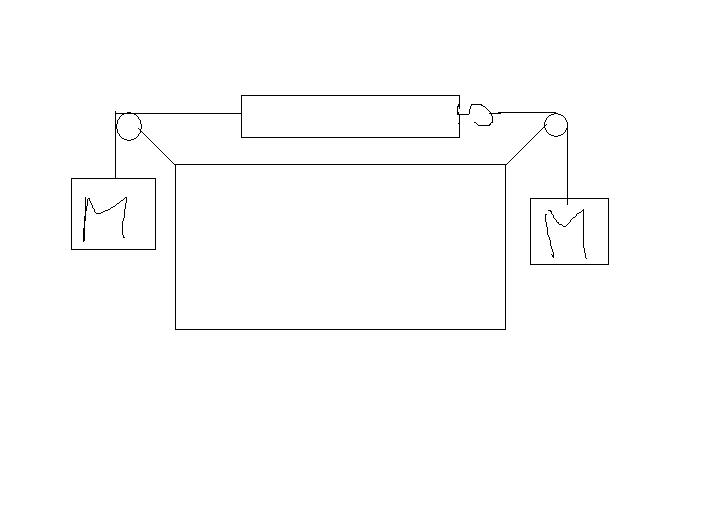
The discussion centers on the physics of the Magdeburg hemispheres, specifically the forces involved in separating the two halves of an evacuated sphere. It highlights a historical experiment where two teams of eight horses failed to separate the hemispheres due to atmospheric pressure. Participants concluded that a single team of eight horses could achieve the same result by anchoring one hemisphere to a sturdy tree, demonstrating the principles of action and reaction in physics. The analysis confirms that the force required to separate the hemispheres remains constant regardless of the number of horses used, as long as one side is secured.
PREREQUISITES
- Understanding of Newton's Third Law of Motion
- Basic knowledge of atmospheric pressure and its effects
- Familiarity with the concept of force and tension in physics
- Experience with experimental physics and historical experiments
NEXT STEPS
- Research the historical context and significance of the Magdeburg hemispheres experiment
- Explore Newton's Laws of Motion in greater detail
- Learn about atmospheric pressure and its measurement techniques
- Investigate practical applications of tension and force in engineering
USEFUL FOR
Physics students, educators, and anyone interested in classical mechanics and historical scientific experiments will benefit from this discussion.