Making a vein viewer with LED lights

Click For Summary

Discussion Overview

The discussion focuses on optimizing a vein viewer using LED lights, exploring factors that influence light penetration through skin, and the arrangement of LEDs. Participants share insights on technical aspects, including light angles, skin color, and LED selection, as well as practical advice for project implementation.

Discussion Character

  • Exploratory
  • Technical explanation
  • Debate/contested

Main Points Raised

  • One participant identifies factors affecting light penetration, including the angle of the lights, skin color, and swollen areas, and seeks additional considerations.
  • Another participant emphasizes the importance of using near-infrared wavelength LEDs, noting that veins absorb this spectrum more than surrounding tissue.
  • There is a question about whether to use parallel light beams versus non-divergent beams for optimal results.
  • Participants discuss the arrangement of LED lights, debating whether a circular or rectangular configuration is preferable, with one suggesting to follow the original project's design while modifying certain aspects.
  • A later reply suggests using a cellphone camera to observe the illuminated area, as it can detect infrared light better than the human eye.

Areas of Agreement / Disagreement

Participants express varying opinions on the optimal arrangement of LEDs and the choice of light beam type. There is no consensus on the best approach, and the discussion remains open to further exploration.

Contextual Notes

Participants have not fully resolved the implications of different LED configurations or the effectiveness of various light beam types, and there may be assumptions regarding the specific LED types and their properties.

Who May Find This Useful

Individuals interested in DIY medical devices, optics, or those exploring the use of LED technology in health applications may find this discussion relevant.

Hieu
Messages
2
Reaction score
0
I'm trying to optimize my vein viewer with LED lights but I'm not sure which factors affect the penetration of the light through the skin. (I'm following this guide https://www.instructables.com/id/How-to-make-an-affordable-Vein-Finder-for-use-d/)
I can say those factors are the angle of the lights, the colour of the skin, swollen areas. Is there anything else I should consider too? And should I use Parallel light beam instead of non-divergence light beam?
The last question I want to ask is about the arrangement of the LED lights. Is it best to arrange them as a circle or a rectangular?
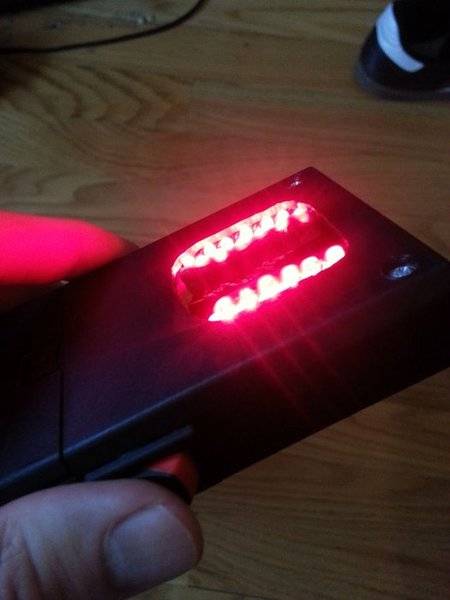
FIUFV3LHELXKGZ5.LARGE.jpg

Sorry for my bad English if there is any mistake.
 

Attachments

  • FIUFV3LHELXKGZ5.LARGE.jpg
    FIUFV3LHELXKGZ5.LARGE.jpg
    21.9 KB · Views: 1,645
Physics news on Phys.org
Hieu said:
I'm trying to optimize my vein viewer with LED lights but I'm not sure which factors affect the penetration of the light through the skin. (I'm following this guide https://www.instructables.com/id/How-to-make-an-affordable-Vein-Finder-for-use-d/)
I can say those factors are the angle of the lights, the colour of the skin, swollen areas. Is there anything else I should consider too? And should I use Parallel light beam instead of non-divergence light beam?
From the link, it sounds like the choice of the LEDs is the most important thing:
This tool works by using near-infrared wavelength LEDs to illuminate the flesh at the site. The veins will appear as dark bands because they are more absorbent of this spectrum of light than the surrounding tissue.
Are you using the exact LEDs that he specifies?
Hieu said:
The last question I want to ask is about the arrangement of the LED lights. Is it best to arrange them as a circle or a rectangular?
In the theme of the project, probably you want to arrange them as he did in his project. However, I wouldn't close off the top of the rectangle with plastic like he did. QUIZ QUESTION -- Why? :biggrin:

BTW, don't expect too much out of this project. The vein viewers that are commercially available use IR light and translate that into visible light that you can see, like this product:

https://sgmh.org/wp-content/uploads/2018/08/accuvein-picture.png

upload_2019-2-20_7-17-16.png
 

Attachments

  • upload_2019-2-20_7-17-16.png
    upload_2019-2-20_7-17-16.png
    23.5 KB · Views: 1,470
Now that it’s been a few days, how is your project going
 
Try looking at the illuminated area with your cellphone camera. They see farther into IR spectrum than our human eyes do.
 

Similar threads

  • · Replies 25 ·
Replies
25
Views
4K
  • · Replies 24 ·
Replies
24
Views
3K
  • · Replies 1 ·
Replies
1
Views
2K
  • · Replies 10 ·
Replies
10
Views
3K
  • · Replies 2 ·
Replies
2
Views
2K
  • · Replies 25 ·
Replies
25
Views
4K
  • · Replies 12 ·
Replies
12
Views
21K
  • · Replies 7 ·
Replies
7
Views
9K
Replies
2
Views
2K
Replies
17
Views
2K