Thom_Silva
- 47
- 1
Hi,
I'm working in a design team for the first time and I'm in charge of choosing a material for an application. I have the constraints, support a tensile load of 50 kg , and the objective which is minimize the weight.
I'm using the concept of material indexes to find the best material for the application:
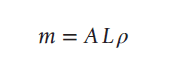
The equation that I want to minimize, regarding that the following constraint is maintained:
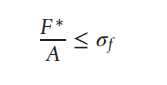
If we substitute A in the first equation we get:
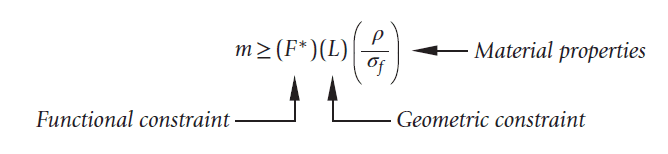
The problem i have now understanding is that the method tells me that i should only carry in minimizing (density/ failure strength), if i find the material that in fact minimizes this, how do i now the first constraint:
is maintained, in literature I'm recurring to they never check this, should i check this for the material i end up choosing , or is this step unnecessary ?
Thank you very much !
I'm working in a design team for the first time and I'm in charge of choosing a material for an application. I have the constraints, support a tensile load of 50 kg , and the objective which is minimize the weight.
I'm using the concept of material indexes to find the best material for the application:
The equation that I want to minimize, regarding that the following constraint is maintained:
If we substitute A in the first equation we get:
The problem i have now understanding is that the method tells me that i should only carry in minimizing (density/ failure strength), if i find the material that in fact minimizes this, how do i now the first constraint:
is maintained, in literature I'm recurring to they never check this, should i check this for the material i end up choosing , or is this step unnecessary ?
Thank you very much !