Motor shaft connections and testing

Click For Summary
SUMMARY

The discussion focuses on connecting loads to a smooth shaft of the Hurst motor using the MCLV-2 development board from Microchip. Users are advised to consider clamp or setscrew couplings, as most commercially available options rely on friction for torque transfer. It is essential to file a flat on the motor shaft to facilitate coupling removal. For performance testing of torque and speed, specific tools are recommended, although not explicitly named in the discussion.

PREREQUISITES
  • Understanding of motor coupling types, specifically clamp and setscrew couplings.
  • Familiarity with torque and speed testing tools for motors.
  • Knowledge of the Hurst motor specifications and characteristics.
  • Basic mechanical skills for modifying motor shafts, such as filing a flat.
NEXT STEPS
  • Research suitable clamp and setscrew couplings for smooth shafts.
  • Investigate torque and speed testing tools compatible with small motors.
  • Learn about the implications of using keys versus friction-based connections in motor applications.
  • Explore the calculation methods for clamp and shrink fit connections.
USEFUL FOR

Engineers, hobbyists, and technicians working with small motors, particularly those involved in motor testing and coupling design.

PhysicsTest
Messages
256
Reaction score
27
TL;DR
I wanted to understand how to connect the motor
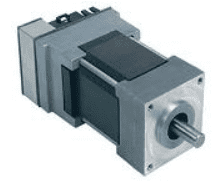
This is an MCLV-2 development board from microchip, with it got the Hurst motor as shown below
1605281371614.png

The problem is that the shaft is smooth i cannot connect the loads etc. So, I want to clarify the below points
a. What type of connectors i should look for and which websites will have the information?
b. If i want to test the performance of the motor i mean the torque, speed. Which tool do i need to buy?
Presently i have not decided the load to connect.
 
Last edited by a moderator:
Engineering news on Phys.org
I personally haven't found many motors without either a keyway or flat spot on the shaft. Any motor with just a round shaft is not likely expected to deliver very much torque.
 
  • Like
Likes   Reactions: berkeman
I do not use keys on high performance servo motors that do a lot of reversing. The reason is that any slippage will eventually hammer the key loose and fret the shaft. Shaft keys work well on drives with minimal reversing torque.

Shaft connections without keys can be done with either clamp or shrink fits. This figure, from the link in Post #4, shows a coupling that uses a clamp fit:
Coupling.jpg

Clamp and shrink fit connections need to be carefully calculated. If the calculations are done correctly, and the coupling is installed correctly, they work very well.

For a small motor like the Hurst motor in the OP, a setscrew should work without problems. It's a good idea to file a flat on the motor shaft for the setscrew. That will make it easier to get the coupling off if the setscrew dimples the shaft.
 
  • Informative
  • Like
Likes   Reactions: DaveE, Lnewqban and berkeman

Similar threads

  • · Replies 10 ·
Replies
10
Views
2K
Replies
3
Views
5K
  • · Replies 6 ·
Replies
6
Views
2K
  • · Replies 5 ·
Replies
5
Views
5K
Replies
58
Views
8K
  • · Replies 4 ·
Replies
4
Views
2K
  • · Replies 1 ·
Replies
1
Views
3K
Replies
9
Views
2K
  • · Replies 14 ·
Replies
14
Views
3K
  • · Replies 1 ·
Replies
1
Views
3K