SUMMARY
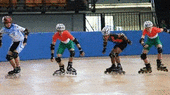
Moving backwards on skates is challenging for humans due to the required inward orientation of the skates and the need for a "pigeon-toed" stance, which is inherently more difficult than the "duck-footed" stance used for forward skating. Skaters must also twist their bodies to maintain visibility while skating backwards, adding to the complexity. While practice and balance can improve this skill, it remains less intuitive than forward movement. The discussion highlights the physiological aspects of skating backwards rather than purely the physics involved.
PREREQUISITES
- Understanding of Newton's laws of motion
- Basic knowledge of skating techniques
- Familiarity with human physiology related to movement
- Experience with balance and coordination exercises
NEXT STEPS
- Research advanced skating techniques for backward movement
- Explore the biomechanics of skating and human motion
- Study the impact of body orientation on balance in sports
- Investigate the potential for competitive sports involving backward skating
USEFUL FOR
Figure skaters, ice hockey players, sports coaches, and anyone interested in the biomechanics of skating and movement efficiency.