SUMMARY
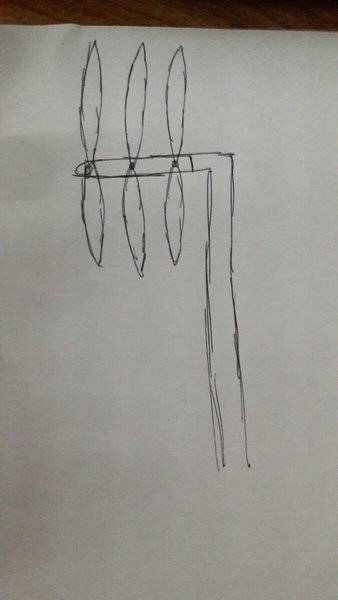
The discussion centers on the effectiveness of multiple smaller rotors on a wind turbine compared to a single larger rotor. Key points include the potential for increased efficiency through dual-rotor designs, but challenges such as the shadowing effect and increased turbulence are significant drawbacks. The conversation references Betz's Law, which indicates that wind turbines can only capture a maximum of 59.3% of the kinetic energy in wind, suggesting that multiple rotors may not yield substantial gains. Additionally, the KISS principle emphasizes the reliability and simplicity of single rotor designs over complex configurations.
PREREQUISITES
- Understanding of Betz's Law in wind energy
- Familiarity with wind turbine design principles
- Knowledge of aerodynamic efficiency and rotor dynamics
- Basic concepts of turbulence and airflow in wind energy systems
NEXT STEPS
- Research "Betz's Law" and its implications for wind turbine efficiency
- Explore "dual-rotor wind turbine designs" and their commercial viability
- Investigate "aerodynamic optimization" techniques for wind turbine blades
- Examine "turbulence effects" on wind turbine performance and energy output
USEFUL FOR
Engineers, renewable energy researchers, and students interested in wind turbine technology and design optimization.