Discussion Overview
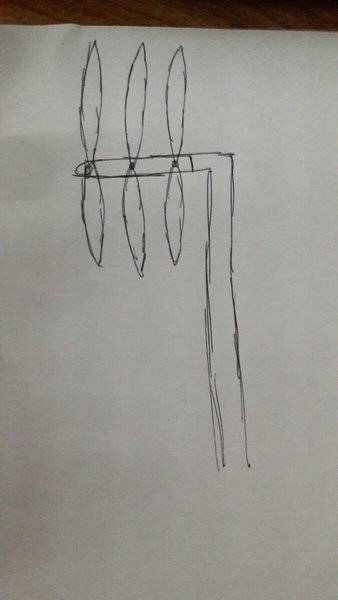
The discussion revolves around the effectiveness of using multiple smaller rotors on a wind turbine compared to a single larger rotor. Participants explore various design considerations, potential advantages, and challenges associated with different rotor configurations, including coaxial arrangements and counter-rotating designs. The conversation touches on theoretical, practical, and engineering aspects of wind turbine design.
Discussion Character
- Exploratory
- Debate/contested
- Technical explanation
- Conceptual clarification
- Homework-related
Main Points Raised
- Some participants question the effectiveness of multiple rotors, suggesting that the rotation of each rotor might slow the others down.
- Concerns are raised about the "shadowing" effect, where one rotor could reduce the efficiency of another by altering the wind flow.
- Participants discuss the potential engineering challenges of mounting multiple rotors on a single shaft, including increased stresses and turbulence.
- Some suggest that the best wind turbine designs have likely already been optimized by experts, implying that new configurations may not yield significant improvements.
- Counter-rotating rotors are mentioned as a possibility that could reduce the minimum wind speed necessary for operation, though this introduces complexity in design.
- There are references to Betz's Law, indicating that the maximum efficiency of wind turbines is limited, which may affect the viability of multiple rotor designs.
- Participants note that larger swept areas generally capture more energy, leading to a preference for simpler designs that maximize this area.
- Some mention that while twin rotor designs have been attempted, they have not achieved commercial success, suggesting that technical advantages do not always translate to market viability.
Areas of Agreement / Disagreement
Participants express a range of views on the effectiveness and practicality of multiple rotor designs. While some acknowledge potential benefits, others emphasize the challenges and limitations, indicating that the discussion remains unresolved with multiple competing perspectives.
Contextual Notes
Participants highlight various assumptions, such as the impact of rotor spacing on efficiency and the complexities introduced by different rotor configurations. There is also mention of the limitations of existing designs and the criteria for evaluating turbine effectiveness, which remain open for further exploration.
Who May Find This Useful
This discussion may be of interest to students, engineers, and researchers exploring wind turbine design, energy efficiency, and the practical implications of rotor configurations in renewable energy technologies.