Newton's Second Law for Translation and Rotation

Click For Summary
The discussion focuses on applying Newton's Second Law (N2L) to various scenarios involving translation and rotation. Participants analyze problems related to angular acceleration, maximum height of a spinning ball, and the motion of a satellite, providing different solutions based on their understanding of N2L. There is a debate about the relevance of a spinning ball in determining its maximum height, with some concluding that spinning does not significantly impact the calculations. Ultimately, the consensus leans towards using N2L for translation in certain cases, especially when the spinning aspect is deemed irrelevant. The conversation emphasizes the importance of correctly identifying the applicable principles in physics problems.
BayRan
Messages
2
Reaction score
0
Homework Statement
For each of the situations below, determine which forms of Newton's second law (N2L) are appropriate.
Relevant Equations
Conceptual ideas.
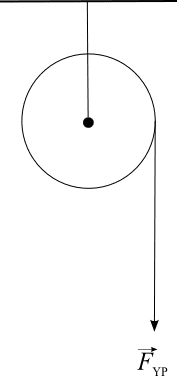
Answer choices: N2L for Translation, N2L for Rotation, Both, Either1. You are asked to find the angular acceleration of a low-friction pulley with a given force exerted on it.

My solution = N2L for rotation
4.png


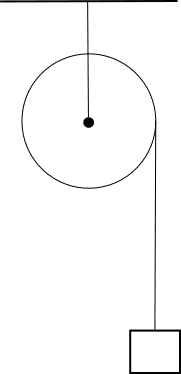
2. You are asked to find the angular acceleration of a low-friction pulley due to a mass hanging from it by a rope.

My solution = Both
5.png


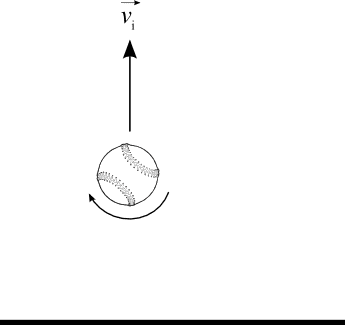
3. You are asked to determine the maximum height of a spinning ball that is thrown upwards.

My solution = Both
2.png


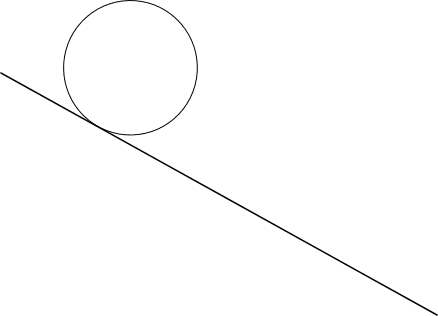
4. You are asked to calculate the time it takes a ball to roll down an inclined plane.

My solution = Both
3.png


5. You are asked to find the tangential acceleration of a small satellite in a circular orbit that results from it firing its thruster.

My solution = Both

6.png


6. You are asked to determine the oribtal period of a small satellite around Earth.

My solution = N2L for translation

1.png
Besides the first two, I'm really just guessing based on my intuition. Please help.
 
Physics news on Phys.org
Let's start with #3. You were asked to find the max height that the ball get to. Why should the fact that it is spinning matter? Did you have to include the spinning part when you solve such a problem? I'm assuming that this is elementary kinematics, and that you're not including Bernoulli effect due to the spinning ball moving through air.

Zz.
 
  • Like
Likes BayRan
ZapperZ said:
Let's start with #3. You were asked to find the max height that the ball get to. Why should the fact that it is spinning matter? Did you have to include the spinning part when you solve such a problem? I'm assuming that this is elementary kinematics, and that you're not including Bernoulli effect due to the spinning ball moving through air.

Zz.

That's true. I had always imagined that the ball would be spinning when someone throws it, but I assumed something would change when we apply N2LR. I changed my answer to N2L for translation.
 
Thread 'Correct statement about size of wire to produce larger extension'
The answer is (B) but I don't really understand why. Based on formula of Young Modulus: $$x=\frac{FL}{AE}$$ The second wire made of the same material so it means they have same Young Modulus. Larger extension means larger value of ##x## so to get larger value of ##x## we can increase ##F## and ##L## and decrease ##A## I am not sure whether there is change in ##F## for first and second wire so I will just assume ##F## does not change. It leaves (B) and (C) as possible options so why is (C)...

Similar threads

  • · Replies 3 ·
Replies
3
Views
2K
Replies
9
Views
2K
Replies
4
Views
729
  • · Replies 5 ·
Replies
5
Views
2K
Replies
13
Views
3K
  • · Replies 13 ·
Replies
13
Views
1K
  • · Replies 12 ·
Replies
12
Views
3K
  • · Replies 10 ·
Replies
10
Views
5K
  • · Replies 4 ·
Replies
4
Views
2K
Replies
44
Views
3K