JHUK
- 5
- 0
I posted in picture format to post on another website, but haven't found a reply yet:
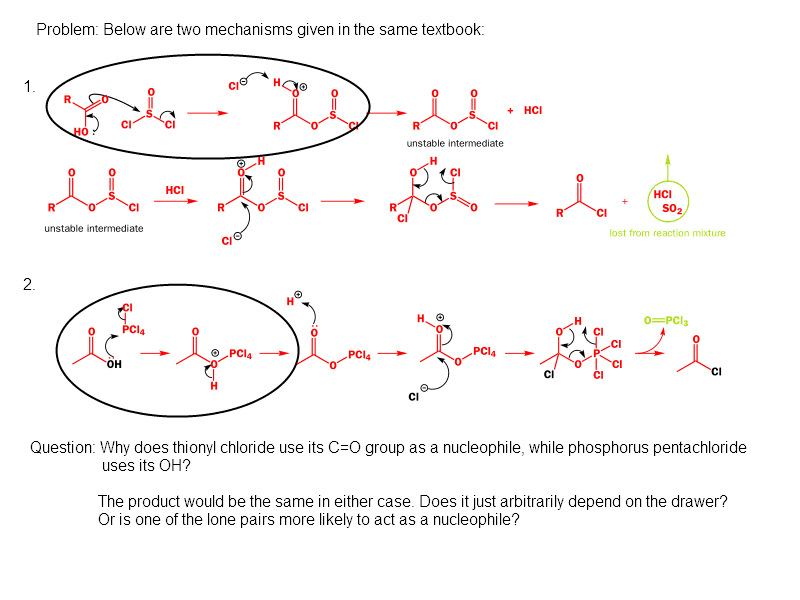
This discussion centers on the nucleophilic behavior of oxygen in carboxylic acid derivatives, specifically the -COOH group. Participants clarify that the oxygens in these groups are equivalent and can be represented by resonance structures, where hydroxyl and carbonyl oxygens interchange. The correct mechanism for nucleophilic attack involves the protonated carbonyl, while the distinction between the carboxylate anion and its protonated form is emphasized. The rapid nature of proton transfer is noted, suggesting that the mechanisms are closely related.
PREREQUISITESChemistry students, organic chemists, and researchers interested in reaction mechanisms and nucleophilic behavior in organic compounds.