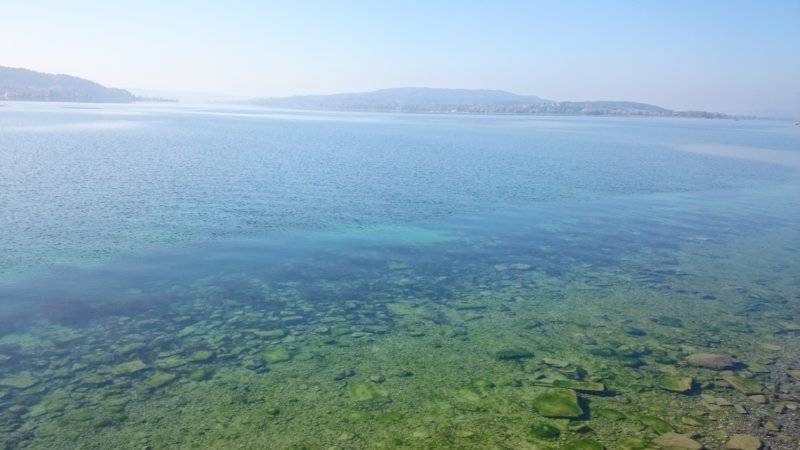
Rippled surface on lake ends abruptly

Click For Summary

Discussion Overview

The discussion centers around the observation of a distinct line on the surface of Lake Constance, where calm water transitions to a more rippled surface. Participants explore potential explanations for this phenomenon, considering factors such as wind effects and underwater topography.

Discussion Character

  • Exploratory, Conceptual clarification, Debate/contested

Main Points Raised

  • One participant notes the abrupt transition between calm and rippled water and questions how the underwater topography might influence surface ripples.
  • Another participant suggests that the bottom has minimal effect on waves if the water is deeper than the wavelength, referencing a source on limnology.
  • A different participant shares personal observations, indicating that wind affects certain areas of the water surface, causing ripples to appear and disappear as the breeze shifts.
  • One participant agrees that light breezes create ripples and suggests that the correlation with underwater features may be coincidental and temporary.

Areas of Agreement / Disagreement

Participants express differing views on the influence of underwater topography versus wind effects on surface ripples, indicating that multiple competing explanations remain without consensus.

Contextual Notes

There are unresolved assumptions regarding the depth of water and its relationship to wave behavior, as well as the specific impact of wind patterns on the observed surface conditions.

greypilgrim
Messages
582
Reaction score
44
Hi.

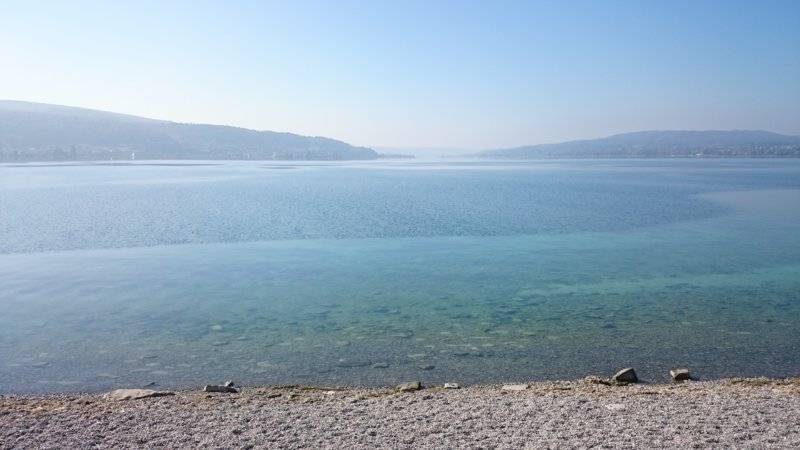
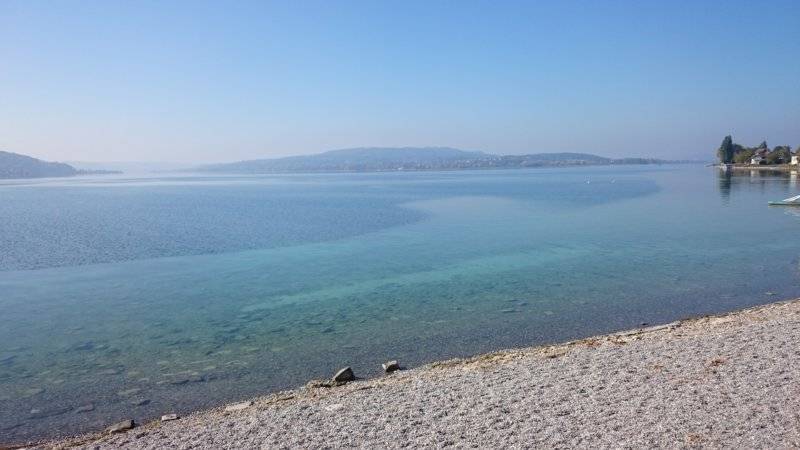
I've made these pictures on Reichenau Island in Lake Constance, Germany. I was suprized about that clear line between the calm area close to the shore and the more rippled surface further out. The wind was weak, but directed from water to land.

From a pier I could see that the ground drops abruptly by 1-2 meters just about under that line. But how could this possibly affect those small surface ripples that much?
DSC_0025.JPG

DSC_0026.JPG

DSC_0027.JPG
 

Attachments

  • DSC_0025.JPG
    DSC_0025.JPG
    41.9 KB · Views: 501
  • DSC_0026.JPG
    DSC_0026.JPG
    42.4 KB · Views: 537
  • DSC_0027.JPG
    DSC_0027.JPG
    40.8 KB · Views: 416
Physics news on Phys.org
The bottom has little, if any, effect on waves if the water is deeper than the distance from one wave crest to the next. The figure below is from Limnology, Third Edition, by Robert Wetzel:
upload_2018-12-2_18-23-42.png

Is there a tree line near the water's edge that blocks the wind such that the wind velocity drops at the water surface where the waves stop?
 

Attachments

  • upload_2018-12-2_18-23-42.png
    upload_2018-12-2_18-23-42.png
    79.8 KB · Views: 443
greypilgrim said:
I've made these pictures on Reichenau Island in Lake Constance, Germany. I was suprized about that clear line between the calm area close to the shore and the more rippled surface further out. The wind was weak, but directed from water to land.
Hi,
I have seen this so very often over the years. The breeze is just blowing across areas of the water. If you watch long enough,
you will see the wind affected areas moving around on the water.
As a result some of the water is in the breeze, some isn't.Dave
 
Agree. Those ripples are caused by light breezes touching the water surface. Sailors use these to spot and anticipate puffs.

The correlation with bottom features is surely coincidental and temporary.
 
  • Like
Likes   Reactions: davenn

Similar threads

  • · Replies 4 ·
Replies
4
Views
3K
Replies
11
Views
5K
  • · Replies 6 ·
Replies
6
Views
4K
  • · Replies 2 ·
Replies
2
Views
4K
  • · Replies 1 ·
Replies
1
Views
4K
  • · Replies 10 ·
Replies
10
Views
2K
  • · Replies 9 ·
Replies
9
Views
3K
  • · Replies 21 ·
Replies
21
Views
6K
  • · Replies 39 ·
2
Replies
39
Views
16K
  • · Replies 16 ·
Replies
16
Views
4K