RLC Circuit Analysis with system of ODEs

Click For Summary
To model an RLC circuit using a system of ordinary differential equations (ODEs), one must apply circuit laws related to resistors, inductors, and capacitors. Key concepts include the relationships between voltage, current, and charge, as well as the definitions of inductance and resistance. The loop equation can be expressed in terms of current, which allows for substitution into the matrix equation. Fundamental mathematical expressions for inductance (L), resistance (R), and capacitance (C) are essential for this analysis. Utilizing physics textbooks can provide further clarity and examples for solving similar problems.
DeclanKerr
Messages
1
Reaction score
0
Thread moved from the technical forums, so no Template is shown
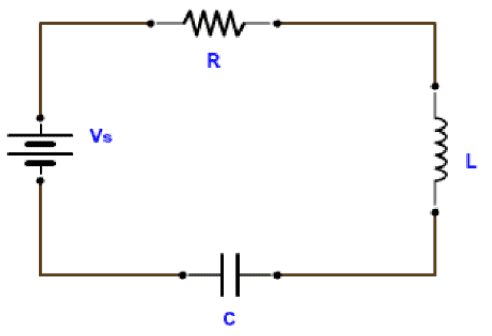
Summary: Looking for guidance on how to model an RLC circuit with a system of ODES, where the variables are the resistor and inductor voltages.

This is a maths problem I have to complete for homework.
243206

The problem is trying to prove that the attached circuit diagram can be modeled using the system of ODEs:

243205

It says to do this using circuit laws, but I am having trouble working out what circuit laws to use that can allow me to create they system provided.

Any help would be appreciated.
Thanks.
 
Physics news on Phys.org
Write out all the laws that you know about capacitors, inductors, resistors, potentials and currents. What is the relation of charge and current, what is the definition of inductance? You will see that some of these laws are already in the form of differential equations. That is just to get your mind working, i.e. the fact that you do already know something and he idea of using what you already know. it's maths homework but look in your physics book, almost any fairly elementary a physics textbook covering electrical circuits. There you will find the very same problem, or very similar, explained probably better than we can do here. But before that do the first bit that I said, so that you realize that you really knew enough probably to make progress on this if you put your mind to it.
 
Last edited by a moderator:
If you write the loop equation in terms of current you can substitute with the parameters in your matrix equation.
You do need the fundamental math expressions for L, R and C in terms of current and voltage as previously indicated.
 
Question: A clock's minute hand has length 4 and its hour hand has length 3. What is the distance between the tips at the moment when it is increasing most rapidly?(Putnam Exam Question) Answer: Making assumption that both the hands moves at constant angular velocities, the answer is ## \sqrt{7} .## But don't you think this assumption is somewhat doubtful and wrong?

Similar threads

  • · Replies 8 ·
Replies
8
Views
2K
  • · Replies 6 ·
Replies
6
Views
4K
  • · Replies 1 ·
Replies
1
Views
3K
  • · Replies 4 ·
Replies
4
Views
725
  • · Replies 3 ·
Replies
3
Views
2K
  • · Replies 6 ·
Replies
6
Views
8K
  • · Replies 6 ·
Replies
6
Views
2K
Replies
44
Views
6K
  • · Replies 3 ·
Replies
3
Views
2K
  • · Replies 5 ·
Replies
5
Views
2K