RLC Circuit Analysis with system of ODEs

Click For Summary
SUMMARY

This discussion focuses on modeling an RLC circuit using a system of ordinary differential equations (ODEs). The key circuit laws relevant to this analysis include Kirchhoff's voltage law, Ohm's law, and the definitions of inductance and capacitance. Participants emphasize the importance of understanding the relationships between charge, current, and voltage to formulate the necessary differential equations. Additionally, it is recommended to reference elementary physics textbooks for further clarification on these concepts.

PREREQUISITES
  • Understanding of Kirchhoff's voltage law
  • Familiarity with Ohm's law
  • Knowledge of inductance and capacitance definitions
  • Basic proficiency in solving ordinary differential equations (ODEs)
NEXT STEPS
  • Review the derivation of differential equations for RLC circuits
  • Study the application of Kirchhoff's laws in circuit analysis
  • Learn how to express circuit parameters in matrix form
  • Explore examples of RLC circuit problems in physics textbooks
USEFUL FOR

This discussion is beneficial for electrical engineering students, circuit designers, and anyone involved in analyzing RLC circuits and their dynamic behavior through differential equations.

DeclanKerr
Messages
1
Reaction score
0
Thread moved from the technical forums, so no Template is shown
Summary: Looking for guidance on how to model an RLC circuit with a system of ODES, where the variables are the resistor and inductor voltages.

This is a maths problem I have to complete for homework.
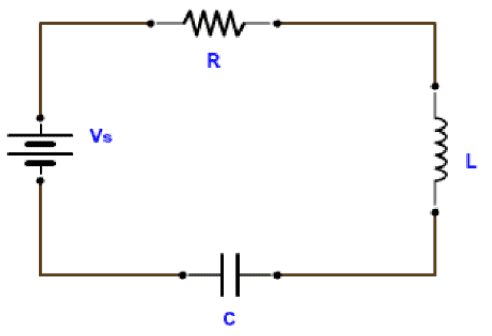
243206

The problem is trying to prove that the attached circuit diagram can be modeled using the system of ODEs:

243205

It says to do this using circuit laws, but I am having trouble working out what circuit laws to use that can allow me to create they system provided.

Any help would be appreciated.
Thanks.
 
Physics news on Phys.org
Write out all the laws that you know about capacitors, inductors, resistors, potentials and currents. What is the relation of charge and current, what is the definition of inductance? You will see that some of these laws are already in the form of differential equations. That is just to get your mind working, i.e. the fact that you do already know something and he idea of using what you already know. it's maths homework but look in your physics book, almost any fairly elementary a physics textbook covering electrical circuits. There you will find the very same problem, or very similar, explained probably better than we can do here. But before that do the first bit that I said, so that you realize that you really knew enough probably to make progress on this if you put your mind to it.
 
Last edited by a moderator:
If you write the loop equation in terms of current you can substitute with the parameters in your matrix equation.
You do need the fundamental math expressions for L, R and C in terms of current and voltage as previously indicated.
 

Similar threads

  • · Replies 8 ·
Replies
8
Views
3K
  • · Replies 6 ·
Replies
6
Views
4K
  • · Replies 1 ·
Replies
1
Views
3K
  • · Replies 4 ·
Replies
4
Views
1K
  • · Replies 3 ·
Replies
3
Views
2K
  • · Replies 6 ·
Replies
6
Views
8K
  • · Replies 6 ·
Replies
6
Views
3K
Replies
44
Views
6K
  • · Replies 3 ·
Replies
3
Views
2K
  • · Replies 5 ·
Replies
5
Views
2K