Discussion Overview
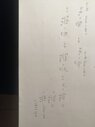
The discussion revolves around the calculations related to rotational speed in a DC machine, specifically focusing on the relationship between excitation voltage (Vexc), torque, and rotational speed. The context appears to be problem-solving related to an exercise involving these parameters.
Discussion Character
- Homework-related, Technical explanation
Main Points Raised
- One participant requests the calculations to verify the approach taken in solving the problem.
- Another participant acknowledges a previous error in their approach, noting that they needed to calculate the torque constant (Kt) as it varies with excitation voltage (Vexc) before determining the new rotational speed while keeping torque constant.
Areas of Agreement / Disagreement
The discussion does not present a consensus, as one participant is seeking verification of calculations while another reflects on their own correction of approach.
Contextual Notes
There may be limitations related to the assumptions made about the relationship between torque, Kt, and rotational speed, which are not fully detailed in the discussion.