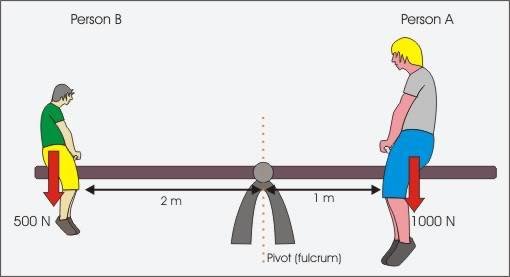
Self Leveling Seesaw. Is It Possible?

  • Context: Undergrad 
  • Thread starter Thread starter TUVIX
  • Start date Start date
  • Tags Tags
    Seesaw Self
Click For Summary
SUMMARY

The discussion centers on the feasibility of creating a self-leveling seesaw using mechanisms like weights, pulleys, and servo systems. Participants unanimously conclude that achieving a perfectly level seesaw is impossible due to inherent mechanical limitations, such as response delays and the dependence of restoring forces on displacement. Suggestions include using a high pivot point or a large mass to minimize tilt, but these do not eliminate it entirely. The consensus is that any mechanism designed to maintain a level position would effectively transform the seesaw into a stationary bench.

PREREQUISITES
  • Understanding of basic mechanical principles, including forces and torques.
  • Familiarity with servo systems and their applications in stabilization.
  • Knowledge of pulley systems and their mechanical advantages.
  • Concept of center of mass and its effect on balance and stability.
NEXT STEPS
  • Research the design and functionality of servo systems for stabilization applications.
  • Explore mechanical principles related to torque and balance in seesaw designs.
  • Investigate the use of pulleys in creating mechanical advantage for weight distribution.
  • Examine case studies of active stabilization systems in engineering projects.
USEFUL FOR

Engineers, physics students, and hobbyists interested in mechanical design, particularly those exploring concepts of balance, stability, and innovative engineering solutions.
TUVIX
Messages
1
Reaction score
0
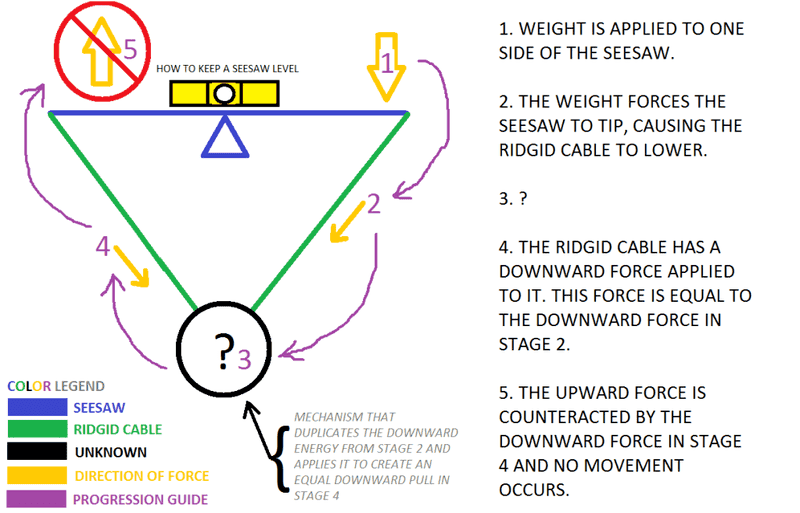
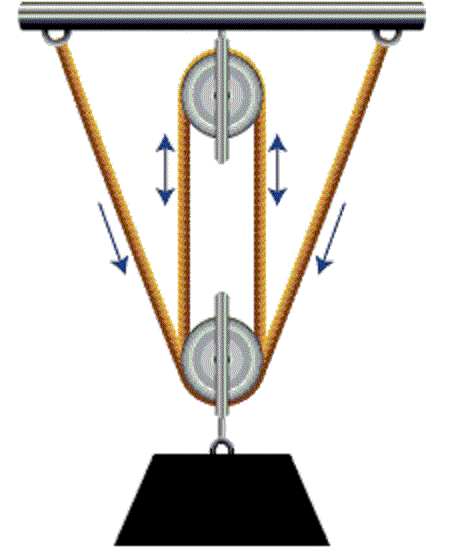
Hi all. A friend and I were discussing whether or not it was possible to construct a mechanism of weights and pulleys etc. or other methods to keep a seesaw level regardless of where the weight was placed on the platform. The end result would be the ability to step onto one side of a level seesaw, and walk to the other end without it moving on its horizontal plane. Here are a few illustrations to help visualize the forces at work:

D1.png


D2.gif


D3.jpg


What does everyone think? Is it possible?
 
Physics news on Phys.org
I think that's called a bench
 
Place a large block of wood underneath each side.
 
Since the input to the mechanism is the degree of tilt, it cannot be possible to compensate completely. As soon as it had done so, it would detect no tilt and stop compensating.
Another problem is the response delay. The delay in response opens the possibility of finding the mechanism's natural frequency.
 
Definitely agree with haruspex, it is not possible because the restoring force depends on the displacement. You can make the seesaw tilt very little, but there will still be tilt.
 
wont work. not possible
 
A Self Leveling Seesaw kind of takes away the point of a see-saw.
 
Fix both cables (at "2" and "4") at the ground ;).
But apart from that, you won't be able to get a full compensation without any active mechanism. However, a large mass at "?" could reduce the tilt a lot.
 
jetwaterluffy said:
A Self Leveling Seesaw kind of takes away the point of a see-saw.

It would be a see-all-the -time?

You could arrange for the pivot to be very high in the air (an inverted T shape, with a long vertical bit and short horizontal bit). The displacement for any imbalance would be very small then as the angle subtended by the cm and the mid point would always be small.
Failing that, you would need a servo system to maintain the see saw horizontal whatever loads were applied.
 
  • #10
Build the seesaw out of neutronium. Then put the hinge on the top so the center of mass of the seesaw plus riders stays effectively right below the pivot point. Since it levels by itself and the mass of the riders is effectively nil they won't budge it (by a measurable amount).

A self stabilizing seesaw is effected by letting the cross beam roll on a large radius cylinder. As it rocks the pivot point moves toward the side which tips lower. Any mechanical pulley system will be equivalent to this. In the limit where it stays exactly level, you've chosen a cylinder of infinite radius, in short you're setting a board on the ground and the kids sit on it. A mechanism with pulleys will do the same in effect becoming tethers in the limit where it works perfectly.

In either extreme, the mechanism which levels will by definition freeze the seesaw... as mentioned making it a bench. One could however create an active mechanism, requiring input of energy, which will stabilize over some time frame but do so slowly enough that the kids could rock. Do it with servos and sensors, or a more complicated mechanical clockwork which needs the empowering mass or spring to be cranked up.
 
  • #11
sophiecentaur said:
You could arrange for the pivot to be very high in the air...

In short a swing.
 
  • #12
Make the seesaw of zero length. Thus you can travel from one end to the other while always remaining under/over the pivot point.
 
  • #13
This thread makes me think we need an silly engineering contest.

A problem is proposed, contestants enter blueprints, sketches. Winner goes to most clever solution.
 

Similar threads

  • · Replies 4 ·
Replies
4
Views
6K
  • · Replies 3 ·
Replies
3
Views
1K
  • · Replies 10 ·
Replies
10
Views
2K
  • · Replies 50 ·
2
Replies
50
Views
4K
  • · Replies 5 ·
Replies
5
Views
3K
  • · Replies 2 ·
Replies
2
Views
1K
Replies
2
Views
3K
  • · Replies 52 ·
2
Replies
52
Views
6K
  • · Replies 74 ·
3
Replies
74
Views
5K
Replies
15
Views
4K