Steps to calculate Air Consumption of a Pneumatic System

Click For Summary
SUMMARY

This discussion focuses on calculating air consumption for pneumatic systems, specifically addressing issues related to insufficient compressed air supply in a car manufacturing press shop. The user outlines steps for calculating pneumatic air consumption in SCFM, determining flow coefficients for valve sizing, and selecting appropriate pipe sizes based on total SCFM. Key specifications include a bore diameter of 250mm, stroke of 200mm, and operation at 5 bar. Recommendations include redesigning the pipeline, considering air tank installation, and ensuring proper valve and filter functionality to optimize system performance.

PREREQUISITES
  • Pneumatic system design principles
  • SCFM calculations for pneumatic cylinders
  • Flow coefficient (Cv) determination for valve sizing
  • Pipe sizing techniques based on flow requirements
NEXT STEPS
  • Research "Pneumatic cylinder air flow requirements" for detailed calculation methods
  • Learn about "Flow coefficient (Cv) calculations" for valve selection
  • Investigate "Pipe sizing guidelines" for pneumatic systems
  • Explore "Air filter maintenance" to prevent clogging issues in pneumatic systems
USEFUL FOR

Engineers, pneumatic system designers, and maintenance technicians involved in optimizing air consumption and performance in manufacturing environments.

Plu3m
Messages
3
Reaction score
0
Hi there, I'm new to this forum and this is my first post so nice to meet you all!
Since English is my second language, I apologize for some odd sentences.

I'm a 4th year university student and currently has an internship in a Press Shop of a car manufacturer in Thailand. The project has been given to me by the training staff to find a solution for quality problems in a specific part stamping operation due to the reason stated below.

For a quality problem, a specific part has die marks (a scratch caused by lower die setting is not in a right position when upper die is stamping). A cause of the problem is two pneumatic cylinders installed in the lower die(in order to set the die in the right shape prepare for stamping) are not supplied by proper amount of compressed air within the set timing(in short, like pneumatic need to complete its cycle within 5 seconds for the lower die to set in a right shape, but right now the pneumatic spend like 10 seconds per cycle).

My solution for the problem is to redesign pipeline, valves or add an air tank to the line. This idea is coming up because when I calculated the air flow rate using the current pipe size a result shows that compressed air flow is not sufficient for the current operation.

The question is "How do I know that my calculation steps utilized are proper?" so I'm here to ask experts!

Given Specs: Bore diameter 250mm , Stroke 200mm, Rod diameter 60mm , operate at 5 bar at STP.
The cylinder is a Double-Acting type with required Extend Stroke 1.177 sec and Retract Stroke 2.200 sec.

These are the steps how I design for air consumption, required flow rate and pipe/valve sizing.

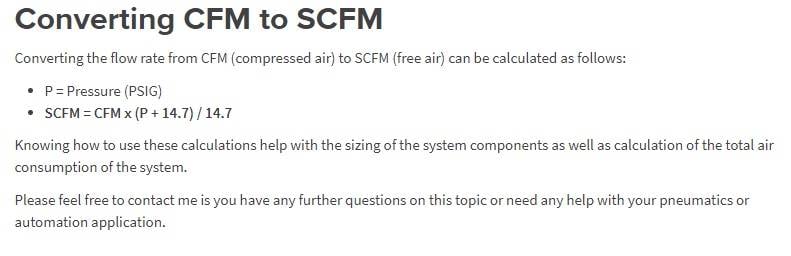
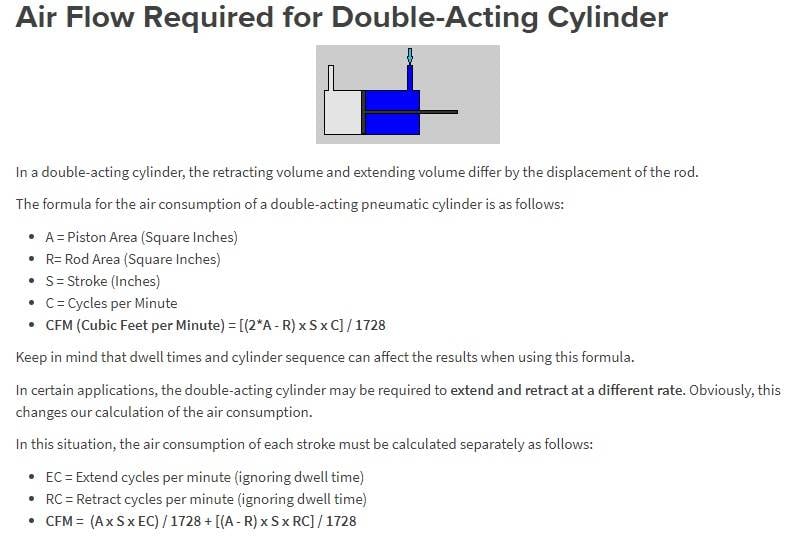
1. Calculate pneumatic air consumption in SCFM (SCFMtotal = SCFMextend + SCFMretract)
jJPSJbn.jpg

lcgEoj2.jpg

Source: https://cross-automation.com/blog/pneumatic-cylinder-air-flow-requirements

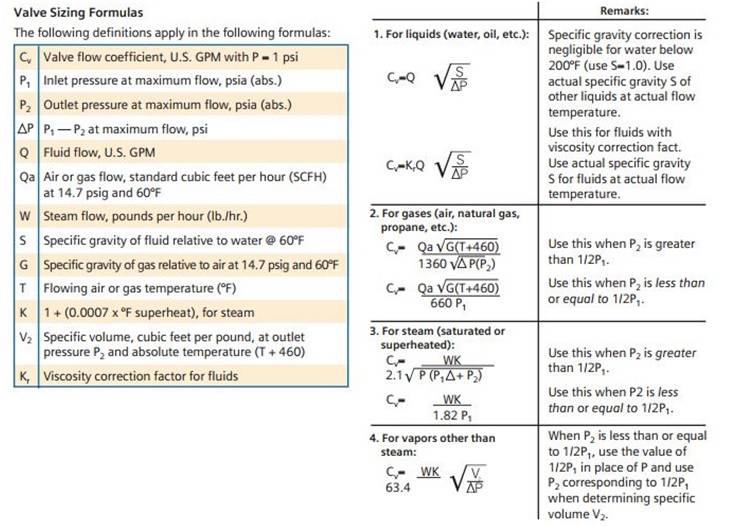
2. Calculate Flow Coefficient(Cv) to select a proper valve size.
wWfey3f.jpg

Source: http://www.globalspec.com/pfdetail/valves/flow

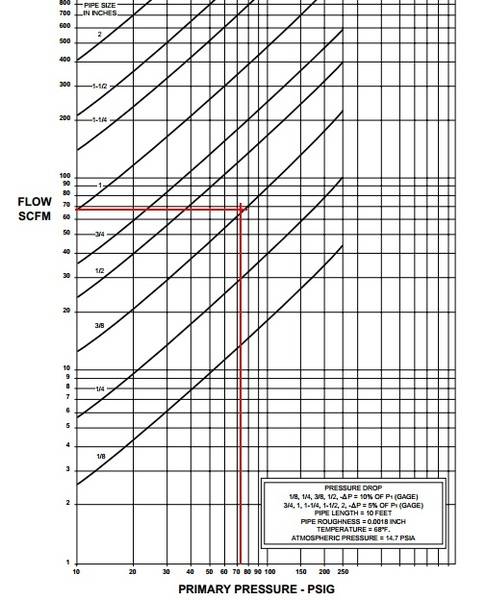
3. Pipe Sizing and system specs (pipe size, length, fitting) by using SCFMtotal obtained from (1.) to select a proper Pipe Size and effective length.
zPfV5Es.jpg

Source: Parker Pneumatic

Here's some additional questions:
Do the calculation steps above sufficient enough to design for the system?
Is an air tank needed in the system, what is its profit?

Is there any improper calculation steps above, I'm waiting for your advice! :smile:
Thanks in advance! and nice to meet you all again.
 
Last edited:
Engineering news on Phys.org
Welcome to PF.
Your english is good. You seem to have enough information to solve the problem.

What are the present diameters and lengths of the compressed air delivery pipeline?
What is the pressure of the compressed air at the inlet to the pipeline?

A local air tank or reservoir might be an advantage, but may not be permitted by safety, it would also need a drain to remove water. A greater diameter pipe would increase flow rate and could also provide a significant local reservoir.
 
Baluncore said:
Welcome to PF.
Your english is good. You seem to have enough information to solve the problem.

What are the present diameters and lengths of the compressed air delivery pipeline?
What is the pressure of the compressed air at the inlet to the pipeline?

A local air tank or reservoir might be an advantage, but may not be permitted by safety, it would also need a drain to remove water. A greater diameter pipe would increase flow rate and could also provide a significant local reservoir.

Nice to meet you Baluncore, and thanks for the replied.

For your questions, the compressed air header pipe is 3/4" and then reduced to 1/2" before connecting to a 1/2" 5ports/2positions solenoid valve installed to control the air flow into the pneumatic cylinder. The pressure at an inlet is also 5 bar.
 
You have the air flow needed during the pneumatic cylinder cycle and you also have the air flow needed during the process cycle (which may include a rest period for the pneumatic cylinder).

If the power source can supply the cylinder air flow, then an air tank is not needed.

If the power source can supply the process air flow but not the cylinder air flow, then an air tank will be helpful. It will fill up during the cylinder down time and be emptied when the cylinder will be in action.

If the power source cannot supply the process air flow, then an air tank will not be helpful. You must increase your power source capacity.
 
Is the speed problem recent or has it always been there?
Have you checked if a filter in the supply line is blocked?
Are the cylinder seals and mechanical linkages free to move quickly?
Is the ½" solenoid valve assembly working correctly? Maybe the very small bleed holes in the valve are blocked, which can significantly increase the air valve switching time.

Plu3m said:
the compressed air header pipe is 3/4" and then reduced to 1/2" before connecting to a 1/2" 5ports/2positions solenoid valve installed to control the air flow into the pneumatic cylinder.
It would appear that the reduction from ¾" to ½" line and solenoid valve is a bottle-neck prior to the cylinder. What size are the cylinder ports? Could you increase the size of the ½" air line and/or the solenoid valve?
 
Baluncore said:
It would appear that the reduction from ¾" to ½" line and solenoid valve is a bottle-neck prior to the cylinder. What size are the cylinder ports? Could you increase the size of the ½" air line and/or the solenoid valve?

The problem occurs frequently these day. Other factors like the die getting older everyday(which mean a friction in moving components is increasing) is also a cause of the problem. Anyway, imo redesign the pipeline system will prevent future problems potential and also solve the current problem which is worth doing more or less. This study is just for collecting essential data and write a proposal to propose a higher level of management (my boss). Changing all the pipe size, adding some tank or purchasing a bigger solenoid valve can be done if the change is worth doing(and within affordable cost).
 
Plu3m said:
Anyway, imo redesign the pipeline system will prevent future problems potential and also solve the current problem which is worth doing more or less.
Even so (and I concur, redesigning the pneumatic circuit is worthwhile) the observation that problems occur more frequently now than before is troubling.
Baluncore said:
Have you checked if a filter in the air supply line is blocked?
Look into this. A clogged filter element can cause your symptom, and will continue to degrade operations even after pipe and valve size is increased. 40 micron is the most common element size for general protection, but replacement elements are often available down to 5 micron. This suggests another possibility - does your company stock several different elements? A finer (higher flow resistance) element installed during machine maintenance would also cause this symptom.

FluidPower World air filter article.

As a troubleshooting aid, you might consider installing pressure gauges immediately upstream and downstream from the filter, positioned where they are both in the technician's field of view. When the filter isn't clogged, both inlet and outlet gauge pointers will indicate nearly identical pressures when the cylinders are at rest, and swing to nearly identical, lower pressures when the cylinders have been actuated. However, as the filter becomes progressively more clogged, the downstream pressure gauge will read considerably lower pressures during cylinder operation.

Don't know if you have one, but I've also seen malfunctioning air oilers cause havoc when they cease to operate. There are plenty of 'dry' systems built without air oilers, and that's fine. The main drawback of a dry system is increased wear, and is often addressed by adding an in-line oiler. However, once an oiler has been installed it is necessary to keep it filled, and operational. If oil delivery ceases, it won't be long before residual oil within cylinders and solenoid valves begins to "gum up" as the volatiles evaporate.
 

Similar threads

Replies
23
Views
3K
Replies
1
Views
912
Replies
6
Views
4K
Replies
1
Views
3K
  • · Replies 45 ·
2
Replies
45
Views
6K
Replies
0
Views
2K
Replies
1
Views
1K
  • · Replies 6 ·
Replies
6
Views
5K
Replies
5
Views
4K
  • · Replies 3 ·
Replies
3
Views
3K