- 16,028
- 7,863
... will be announced tomorrow, October 7. Does anyone want to make a guess as to who it will be, or which field?
The forum discussion centers around predictions for the 2014 Nobel Prize in Physics, set to be announced on October 7. Participants speculate on potential winners, highlighting Takaaki Kajita and Art McDonald for their contributions to neutrino research. The conversation also touches on the significance of blue LEDs, awarded in the same year, and their impact on energy consumption and technology. The debate includes perspectives on the importance of experimental physics versus theoretical contributions, particularly in relation to the historical context of significant inventions like the transistor.
PREREQUISITESPhysics enthusiasts, students of science, and professionals in the fields of experimental and theoretical physics will benefit from this discussion, particularly those interested in the Nobel Prize's impact on scientific innovation and recognition.
Here's a link to the 2014 schedule:DataGG said:Are all the Nobel prizes announced tomorrow, or just physics?
I read an opinion that the area of neutrino oscillations is prime real estate. Coincidence that I read PeterDonis commenting that a PF post is out-of-date, mentioning neutrinos as an example of "massless particles"...?jtbell said:... will be announced tomorrow, October 7. Does anyone want to make a guess as to who it will be, or which field?
TumblingDice said:maybe this breaks the ice!
Monique said:Boring? I'm sure they don't give out Nobel prizes for being boring. This does not only affect the light bulb above the kitchen table, it's a benefit for society and is influencing the progress of science itself. Because of the blue LED discovery I can live-image biological processes, without overheating the sample.. to just name a personal example :)
dipole said:Little boring if you ask me.
dipole said:Well toilet brushes are very useful to society, but are still very boring. Then again I find most experimental stuff boring since at the end of the day experimentalists spend 95% of their time solving engineering problems, give or take.
M Quack said:Very useful, yes. But it looks more like materials engineering than hard core physics.
dipole said:Little boring if you ask me.
M Quack said:Very useful, yes. But it looks more like materials engineering than hard core physics.
collinsmark said:I took an optoelectronics class back in the mid '90s, soon after blue LEDs were first invented. It was an exciting time to take that class because physicists and engineers alike had been struggling to create a blue LED for decades.
In 1968, deep inelastic scattering experiments at the Stanford Linear Accelerator Center (SLAC) showed that the proton contained much smaller, point-like objects and was therefore not an elementary particle.[6][7][26] Physicists were reluctant to firmly identify these objects with quarks at the time, instead calling them "partons"—a term coined by Richard Feynman.[27][28][29] The objects that were observed at SLAC would later be identified as up and down quarks as the other flavors were discovered.
collinsmark said:The transistor might not have been the flashiest of discoveries, but it is considered almost unanimously to be the most significant invention of the 20th century. Without that discovery you wouldn't be reading this thread right now because there would be no computers
bold by mevoko said:That is not true. We had computers without transistors. And even if we hypothesise for a second we do not have semiconductors at all, we cannot really say what other technology we could have developed by now.
Yes, but it still had semiconductors. :Dzoki85 said:ENIAC is better example
ENIAC contained 17,468 vacuum tubes, 7,200 crystal diodes, ...
Hehehe, the main contribution of the Nobel prize winners to the science in 1947 is the right combination of semiconductors joined together in order to get "transistor effect". Can't be simplier than that :Ddlgoff said:Yes, but it still had semiconductors. :D
voko said:That is not true. We had computers without transistors. And even if we hypothesise for a second we do not have semiconductors at all, we cannot really say what other technology we could have developed by now.
dlgoff said:bold by me
Yes we did.
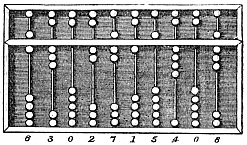
zoki85 said:ENIAC is better example
 . But a computer that allows you to read this thread, using whatever sort of thing you are using to read this sentence, right here and now on something called Physics Forums, is the type of computer that I meant.