Who Will Win the 2014 Nobel Prize in Physics?
- Thread starter jtbell
- Start date
-
- Tags
- Nobel prize Physics
Join the discussion
Registration is free. Start your own thread to ask a follow-up.
73 replies · 13K views
Physics news on Phys.org
Discussion
dipole
- 553
- 149
Oh exciting! I have no prediction, but I would like to see a prize in Biophysics at some point.
DataGG
Gold Member
- 157
- 22
Are all the Nobel prizes announced tomorrow, or just physics?
TumblingDice
Gold Member
- 471
- 47
Here's a link to the 2014 schedule:DataGG said:Are all the Nobel prizes announced tomorrow, or just physics?
www.businessinsider.com/2014-nobel-prize-announcement-schedule-2014-10
"How to Watch Live":
www.livescience.com/48144-nobel-prizes-2014-live-webcast.html
TumblingDice
Gold Member
- 471
- 47
I read an opinion that the area of neutrino oscillations is prime real estate. Coincidence that I read PeterDonis commenting that a PF post is out-of-date, mentioning neutrinos as an example of "massless particles"...?jtbell said:... will be announced tomorrow, October 7. Does anyone want to make a guess as to who it will be, or which field?
So maybe Takaaki Kajita, who devised the detection method for the Super-Kamiokande experiment in Japan, or Art McDonald, who led the SNO project in Canada.
I didn't really want to make a guess, but maybe this breaks the ice!
Enigman
- 647
- 311
I am hoping for BICEP-2 but don't think it will win as there are still kinks to work out.
Rubin might finally get the long due Nobel though, which would more than make up for BICEP2.
Rubin might finally get the long due Nobel though, which would more than make up for BICEP2.
Nikitin
- 734
- 27
Wee my university got the '14 nobel prize in medicine!
- 20,002
- 11,120
Looking forward to the announcement!
moriheru
- 273
- 16
Do you know where I can watch this in the internet, if I can(god I'm excited:) )? I missed it last time. Ah yes I missed the post above,sorry for the useless post.
Last edited:
moriheru
- 273
- 16
When does it start in english time?
Science Advisor
Gold Member
- 4,458
- 3,266
dipole
- 553
- 149
Little boring if you ask me.
Staff Emeritus
Science Advisor
Gold Member
- 4,229
- 61
Boring? I'm sure they don't give out Nobel prizes for being boring. This does not only affect the light bulb above the kitchen table, it's a benefit for society and is influencing the progress of science itself. Because of the blue LED discovery I can live-image biological processes, without overheating the sample.. to just name a personal example :)
zoki85
- 1,198
- 230
Well deserved! Colleagues invented something very useful :)
M Quack
- 893
- 68
Very useful, yes. But it looks more like materials engineering than hard core physics.
dipole
- 553
- 149
Monique said:Boring? I'm sure they don't give out Nobel prizes for being boring. This does not only affect the light bulb above the kitchen table, it's a benefit for society and is influencing the progress of science itself. Because of the blue LED discovery I can live-image biological processes, without overheating the sample.. to just name a personal example :)
Well toilet brushes are very useful to society, but are still very boring. Then again I find most experimental stuff boring since at the end of the day experimentalists spend 95% of their time solving engineering problems, give or take.
Science Advisor
Homework Helper
- 3,447
- 3,741
dipole said:Little boring if you ask me.
dipole said:Well toilet brushes are very useful to society, but are still very boring. Then again I find most experimental stuff boring since at the end of the day experimentalists spend 95% of their time solving engineering problems, give or take.
The transistor might not have been the flashiest of discoveries, but it is considered almost unanimously to be the most significant invention of the 20th century. Without that discovery you wouldn't be reading this thread right now because there would be no computers, no cell phones, no electronic-gadget-anything smaller than a vacuum tube.
Blue LEDs are not in the same league as the transistor, but they will likely have a great impact on society regarding reduced energy consumption.
(And technically, blue LEDs are "flashier" after all :) )
M Quack said:Very useful, yes. But it looks more like materials engineering than hard core physics.
There is a lot of engineering that goes into blue LED manufacturing, no mistake. But the discovery/invention does involve a lot of hard core, solid state physics.
I took an optoelectronics class back in the mid '90s, soon after blue LEDs were first invented. It was an exciting time to take that class because physicists and engineers alike had been struggling to create a blue LED for decades. Some had even resigned/convinced themselves that it couldn't be done. So when it was accomplished, many were quite pleased at the accomplishment.
We didn't go into the physics of blue LEDs in much detail in the class, since the invention was newer than our new textbooks (again, this was in the mid '90s). But we did touch on the subject. And as I remember it at the time, the quantum mechanics involved was not only pretty intense, but the method involved in getting the energy wells just right to create the desired bandgap was quite a clever idea. (I don't don't remember much more than the fact that it was unique and clever though.)
Last edited:
Zarqon
- 216
- 30
dipole said:Little boring if you ask me.
M Quack said:Very useful, yes. But it looks more like materials engineering than hard core physics.
Just remember, that a part of the original wording on nobel's will states "discovery or invention" with "great benefit for mankind". In light of this (pun intended) this years prize fits very well as it's an invention that will benefit a very large number of people. On the other hand the will doesn't say that it has to look like hard core physics ;)
Science Advisor
Gold Member
- 4,458
- 3,266
collinsmark said:I took an optoelectronics class back in the mid '90s, soon after blue LEDs were first invented. It was an exciting time to take that class because physicists and engineers alike had been struggling to create a blue LED for decades.
It's funny how "things" are perceived early on. This is what was talked about when I was in college.
In 1968, deep inelastic scattering experiments at the Stanford Linear Accelerator Center (SLAC) showed that the proton contained much smaller, point-like objects and was therefore not an elementary particle.[6][7][26] Physicists were reluctant to firmly identify these objects with quarks at the time, instead calling them "partons"—a term coined by Richard Feynman.[27][28][29] The objects that were observed at SLAC would later be identified as up and down quarks as the other flavors were discovered.
http://en.wikipedia.org/wiki/Quark
Not boring IMO.
voko
- 6,053
- 391
collinsmark said:The transistor might not have been the flashiest of discoveries, but it is considered almost unanimously to be the most significant invention of the 20th century. Without that discovery you wouldn't be reading this thread right now because there would be no computers
That is not true. We had computers without transistors. And even if we hypothesise for a second we do not have semiconductors at all, we cannot really say what other technology we could have developed by now.
Science Advisor
Gold Member
- 4,458
- 3,266
Yes, but it still had semiconductors. :Dzoki85 said:ENIAC is better example
ENIAC contained 17,468 vacuum tubes, 7,200 crystal diodes, ...
zoki85
- 1,198
- 230
Hehehe, the main contribution of the Nobel prize winners to the science in 1947 is the right combination of semiconductors joined together in order to get "transistor effect". Can't be simplier than that :Ddlgoff said:Yes, but it still had semiconductors. :D
Science Advisor
Homework Helper
- 3,447
- 3,741
voko said:That is not true. We had computers without transistors. And even if we hypothesise for a second we do not have semiconductors at all, we cannot really say what other technology we could have developed by now.
dlgoff said:bold by me
Yes we did.
zoki85 said:ENIAC is better example
Yes, yes, of course.
 . But a computer that allows you to read this thread, using whatever sort of thing you are using to read this sentence, right here and now on something called Physics Forums, is the type of computer that I meant.
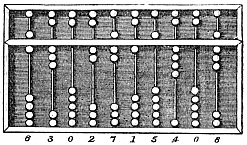
ENIAC like computers, abacuses and mechanical Turing machines are all fine and dandy, but without the transistor there would be no Physics Forums, no cell phones that you can stick in your pocket, no Google, no high speed Internet; at least nothing technological, fast, small and light, as we've come to know it today.
Back to the topic, LEDs don't share quite the same significance as the transistor. And there existed blue, incandescent lights before blue LEDs (similar in a way to how the abacus predates the modern computer). Yet never-the-less their invention is still a crafty set of physics and their use is poised to benefit future generations.
[Edit: And btw, when I mentioned that most agree that the transistor was the most influential invention of its century, I'm speaking of the 20th century in particular. One would be hard pressed to find an alternative invention of the 20th century that had a larger impact on humanity than the transistor.]
Last edited:
Similar threads
Undergrad
Nobel Prize in Physics 2026 predictions
- pines-demon
- · Replies 28 ·
- Other Physics Topics
- Replies
- 28
- pines-demon
- · Replies 37 ·
- Other Physics Topics
- Replies
- 37
- Orodruin
- · Replies 105 ·
- Other Physics Topics
- Replies
- 105
- Suekdccia
- · Replies 1 ·
- Other Physics Topics
- Replies
- 1
- robphy
- · Replies 3 ·
- Other Physics Topics
- Replies
- 3
- jtbell
- · Replies 1 ·
- Other Physics Topics
- Replies
- 1
- Blackberg
- · Replies 9 ·
- Other Physics Topics
- Replies
- 9
- bhobba
- · Replies 2 ·
- Other Physics Topics
- Replies
- 2
- pines-demon
- · Replies 37 ·
- Other Physics Topics
- Replies
- 37
- Suekdccia
- · Replies 6 ·
- Other Physics Topics
- Replies
- 6