Discussion Overview
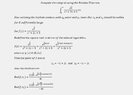
The discussion revolves around the application of the residue theorem to evaluate integrals, particularly focusing on the use of residues and contour integration techniques. Participants explore the necessary steps and considerations for solving related problems, including the selection of branches for multi-valued functions and the choice of contours.
Discussion Character
- Exploratory
- Technical explanation
- Homework-related
Main Points Raised
- One participant expresses uncertainty about the direction of their approach and questions whether the Euler formula is necessary after finding residues.
- Another participant notes the importance of choosing a branch for the logarithm due to the multi-valued nature of square roots and suggests using a keyhole contour for the residue theorem.
- A participant seeks confirmation on their understanding of the process, indicating they will compute four integrals and relate them to the sum of the residues.
- Another participant affirms the correctness of the previous steps and advises demonstrating that the integral becomes negligible over certain parts of the contour.
- A later reply provides a specific evaluation of the integral, presenting a boxed result without further discussion on its derivation.
Areas of Agreement / Disagreement
Participants generally agree on the steps involved in applying the residue theorem, but there are varying levels of understanding and clarity regarding the details of the process. The discussion remains somewhat unresolved as participants continue to seek clarification and confirmation of their approaches.
Contextual Notes
There are limitations regarding the assumptions made about the choice of contours and branches, which are not fully explored. The discussion does not resolve the specifics of the integral evaluation or the implications of the provided boxed result.