The Schwarzschild Metric: Part 1, GPS Satellites - Comments

Click For Summary

Discussion Overview

The discussion revolves around the Schwarzschild Metric in the context of GPS satellites, particularly focusing on the implications of time dilation and the assumptions made in calculations related to Earth's rotation and clock synchronization.

Discussion Character

  • Technical explanation
  • Conceptual clarification
  • Debate/contested

Main Points Raised

  • Some participants note a typographical error regarding Johannes Kepler's name.
  • One participant suggests that the assumption of a non-rotating Earth in the calculation of ##\Delta \tau_R## is acceptable for the specific analysis but raises concerns about the implications of Earth's rotation on clock synchronization.
  • Another participant mentions the potential addition of a term related to Earth's rotation to the calculations, indicating that it is of a much smaller order compared to other terms but still relevant for a more comprehensive understanding.

Areas of Agreement / Disagreement

Participants generally agree on the validity of the calculations presented but express differing views on the implications of assuming a non-rotating Earth and the importance of considering additional factors such as clock synchronization.

Contextual Notes

There are unresolved aspects regarding the impact of Earth's rotation on time dilation and synchronization, as well as the specific mathematical implications of adding terms to the equations discussed.

Who May Find This Useful

This discussion may be useful for students and professionals interested in general relativity, time dilation effects, and the practical applications of the Schwarzschild Metric in modern technology such as GPS.

RUTA
Science Advisor
Insights Author
Messages
1,520
Reaction score
569
Greg Bernhardt submitted a new PF Insights post

The Schwarzschild Metric: Part 1, GPS Satellites
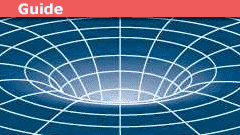
gps1.png


Continue reading the Original PF Insights Post.
 

Attachments

  • gps1.png
    gps1.png
    14.2 KB · Views: 910
  • Like
Likes   Reactions: MVanti, Paul Colby, fresh_42 and 1 other person
Physics news on Phys.org
Just a little remark. It is Johannes Kepler, not Keplar.
 
Nice Insight? I have one comment, though: it might be worth mentioning that in the calculation of ##\Delta \tau_R## (for the Earth observer), you are assuming the Earth is non-rotating. That turns out to be OK for the particular calculation you are doing because the time dilation correction due to this is roughly two orders of magnitude smaller than the effects you compute; but rotation also introduces other complications, such as correctly defining clock synchronization, which can't be ignored (the excellent Ashby paper you refer to goes into all this).
 
fresh_42 said:
Just a little remark. It is Johannes Kepler, not Keplar.

Haha, thnx, I fixed that!
 
PeterDonis said:
Nice Insight? I have one comment, though: it might be worth mentioning that in the calculation of ##\Delta \tau_R## (for the Earth observer), you are assuming the Earth is non-rotating. That turns out to be OK for the particular calculation you are doing because the time dilation correction due to this is roughly two orders of magnitude smaller than the effects you compute; but rotation also introduces other complications, such as correctly defining clock synchronization, which can't be ignored (the excellent Ashby paper you refer to goes into all this).

As an additional problem for my GR students, I have them add the ##-\frac{v^2}{c^2}## term to Eq(4) for the rotation of Earth and show that it’s of order ##10^{-12}## while the ##\frac{2M}{R}## term is of order ##10^{-9}##. I considered adding that equation to this Insight, since it’s just one more equation. Given your comment, I think I’ll do that :-)
 
  • Like
Likes   Reactions: Greg Bernhardt

Similar threads

  • · Replies 103 ·
4
Replies
103
Views
7K
  • · Replies 2 ·
Replies
2
Views
2K
  • · Replies 2 ·
Replies
2
Views
2K
  • · Replies 43 ·
2
Replies
43
Views
3K
  • · Replies 0 ·
Replies
0
Views
2K
  • · Replies 6 ·
Replies
6
Views
3K
  • · Replies 16 ·
Replies
16
Views
2K
  • · Replies 6 ·
Replies
6
Views
2K
  • · Replies 26 ·
Replies
26
Views
5K
  • · Replies 33 ·
2
Replies
33
Views
5K