Discussion Overview
The discussion revolves around the necessary tools and instruments that participants use in the field of science. This includes a variety of writing instruments, computing devices, and software applications, reflecting personal preferences and practices in scientific work.
Discussion Character
- Exploratory
- Technical explanation
- Debate/contested
Main Points Raised
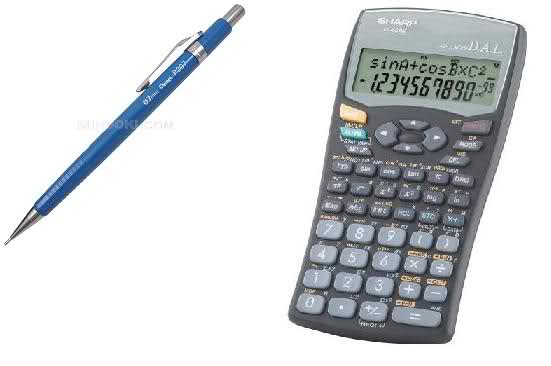
- Some participants mention specific tools like the Pentel P207 mechanical pencil and Sharp EL531 scientific calculator as essential for their work.
- Others propose alternative tools such as the Pentel QE515 "Twist-Erase" pencil, various types of paper, and digital devices like tablets and PCs.
- Several participants emphasize the use of software like MATLAB, Simulink, and Mathematica, highlighting their importance in scientific calculations and modeling.
- There are differing opinions on the use of pencils versus pens, with some expressing a strong preference for one over the other.
- A participant humorously mentions a personal attachment to their dilution refrigerator, indicating a more emotional connection to their tools.
- Some participants note the use of generic tools, such as a simple mechanical pencil or a basic scientific calculator, as sufficient for their needs.
- One participant discusses experimenting with different writing tools and paper types, expressing uncertainty about which is more effective.
Areas of Agreement / Disagreement
Participants generally express a variety of personal preferences regarding tools, with no consensus on a single "best" tool. The discussion remains unresolved with multiple competing views on the effectiveness and necessity of different instruments.
Contextual Notes
Some participants mention specific software and hardware setups, but the discussion does not delve into the technical specifications or limitations of these tools. There is also a lack of consensus on the effectiveness of different writing instruments.
Who May Find This Useful
This discussion may be of interest to students, educators, and professionals in scientific fields looking for insights into the tools and instruments preferred by their peers.