Homework Help Overview
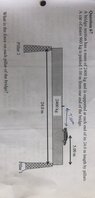
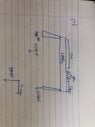
The discussion revolves around a physics problem involving torque and forces acting on two pillars supporting a structure, likely a bridge, with a car positioned above them. Participants are exploring the distribution of forces and moments due to the car's weight and how to analyze the system's equilibrium.
Discussion Character
- Exploratory, Assumption checking, Conceptual clarification
Approaches and Questions Raised
- Participants discuss the distribution of weight on the pillars, questioning whether the weight is equally shared or concentrated on the pillar directly beneath the car. There are inquiries about the definition and application of torque and moment balance, as well as the need for formulas related to equilibrium.
Discussion Status
The discussion is active, with participants raising questions about assumptions and clarifying concepts related to torque and equilibrium. Some guidance has been offered regarding the application of moment balance and the importance of defining the system being analyzed.
Contextual Notes
Participants express uncertainty about specific terms and concepts, such as "moment balance" and the conditions for equilibrium. There are references to external resources for further clarification, indicating a collaborative effort to understand the problem better.