Charles Lee
- 1
- 0
Hello everyone,
I found various physics problems online randomly and looks like I can use it to help me study for tests and was wondering if you guys can provide a simple solution/explanation to it. It would be a great help, Thank you!
Conservation of Energy:
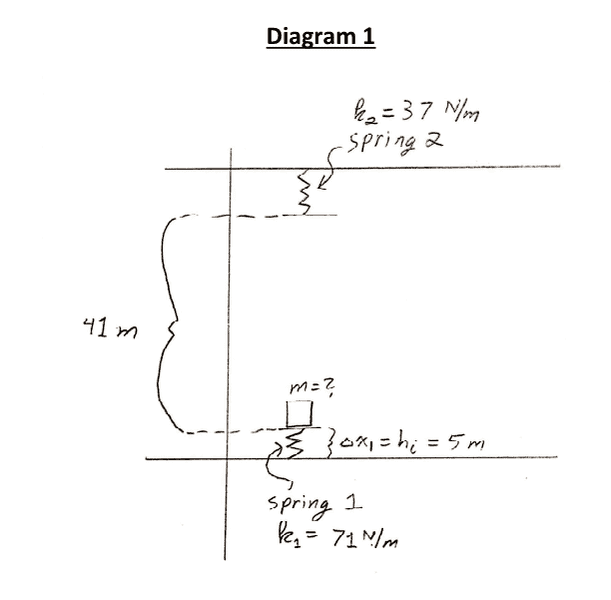
a. If Spring 2 can only compress by 2 meters, what mass must the bock have, given the setup depicted in diagram 1, to compress spring 2 by exactly that amount? Note: Assume that the block starts from rest
b. What is the block’s maximum velocity and when and where does it occur?
_____________________________________________________________________________________
Work-Energy Theorem:
a. What physical condition must be true for the Work-Energy Theorem to become a statement of Conservation of Energy?
b. Use your answer from part a) to derive a statement of Conservation of Energy from the Work-Energy Theorem.
c. Use your answer from part b) to demonstrate that energy is conserved by passing back and forth between Kinetic Energy and Potential Energy.
_____________________________________________________________________________________
3. Collisions:
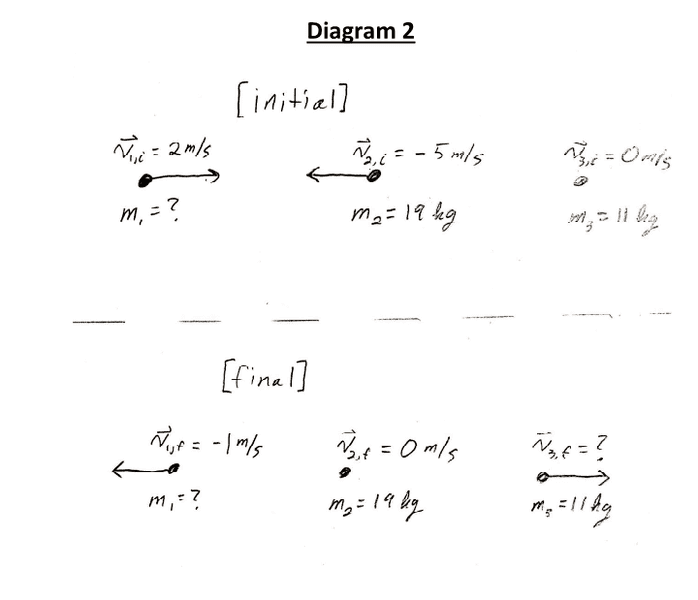
a. Determine m1 and v3, based on the initial and final conditions depicted in diagram 2...
I found various physics problems online randomly and looks like I can use it to help me study for tests and was wondering if you guys can provide a simple solution/explanation to it. It would be a great help, Thank you!
Conservation of Energy:
a. If Spring 2 can only compress by 2 meters, what mass must the bock have, given the setup depicted in diagram 1, to compress spring 2 by exactly that amount? Note: Assume that the block starts from rest
b. What is the block’s maximum velocity and when and where does it occur?
_____________________________________________________________________________________
Work-Energy Theorem:
a. What physical condition must be true for the Work-Energy Theorem to become a statement of Conservation of Energy?
b. Use your answer from part a) to derive a statement of Conservation of Energy from the Work-Energy Theorem.
c. Use your answer from part b) to demonstrate that energy is conserved by passing back and forth between Kinetic Energy and Potential Energy.
_____________________________________________________________________________________
3. Collisions:
a. Determine m1 and v3, based on the initial and final conditions depicted in diagram 2...