What Are the Key Concepts and Equations in Quantum Field Theory?

Click For Summary

Discussion Overview

The discussion revolves around key concepts and equations in Quantum Field Theory (QFT), exploring its relationship with Quantum Mechanics (QM). Participants examine the role of the Dirac equation, the evolution of macroscopic objects, the nature of position as an observable, and the concept of superposition in QFT compared to QM.

Discussion Character

  • Exploratory
  • Technical explanation
  • Debate/contested

Main Points Raised

  • Some participants assert that the Dirac equation is not the primary equation in QFT, suggesting that the operator version of coupled Dirac and Maxwell equations defines Quantum Electrodynamics (QED).
  • There is a question regarding which equation governs the evolution of macroscopic objects in QFT, with some suggesting that these objects can be modeled as a few quantum fields with macroscopic mass density.
  • Participants discuss the concept that in QFT, position is not treated as an observable, leading to confusion about how superpositions of positions are handled compared to QM.
  • Some participants clarify that only states can be superimposed in QFT, not positions, and emphasize the importance of understanding Fock space for serious discussions in QFT.
  • There is a debate about whether superpositions of positions exist in QFT, with some suggesting that this concept is not applicable in the same way as in QM.
  • Questions arise about the meaning of the notation |x⟩ in QFT, with participants discussing the absence of a position operator and relating it to field operators instead.

Areas of Agreement / Disagreement

Participants express differing views on the role of the Dirac equation, the treatment of position as an observable, and the nature of superposition in QFT versus QM. The discussion remains unresolved with multiple competing views present.

Contextual Notes

Some participants highlight the need for a solid understanding of basic quantum mechanics before delving into QFT, indicating that foundational concepts may influence interpretations and discussions.

StevieTNZ
Messages
1,944
Reaction score
837
From a previous post, I now know that the 'qualities' of QM such as entanglement, superposition of states, decoherence, measurement problem, are still with us in QFT.

1. Is the Dirac equation the primary equation in QFT?
2. What equation governs the evolution of a macroscopic object in QFT?
3.
In quantum field theory, unlike in quantum mechanics, position is not an observable, and thus, one does not need the concept of a position-space probability density.
How does one calculate the superposition of positions for a microscopic or macroscopic object in QFT? Does that equation evolve in the same way as the Schrödinger Equation?

I found this http://en.wikipedia.org/wiki/Newton–Wigner_localization, but doesn't that only apply to single particle? Is it even an equation?

and one final question:
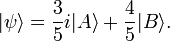
How do you write all the possible states of a quantum system in QFT?
e.g.
53f022e55f73bdd97aaf76e69d85c9be.png
 
Physics news on Phys.org
I just started playing with QFT, but I can say this much: the Dirac equation isn't the fundamental equation. It describes the electron (or positron), relativistically. But it doesn't describe other particles.

You might try taking a flip through Zee's book: Quantum Field Theory in a Nutshell. Its very readable and you can get a general flavor out of it even if you're not working the problems (to a certain degree).
 
StevieTNZ said:
1. Is the Dirac equation the primary equation in QFT?
No. The primary equations are the operator version of a coupled Dirac and Maxwell equations. This defines (in some sense) QED.
http://en.wikipedia.org/wiki/Quantum_electrodynamics#Equations_of_motion
The Dirac equation is a warm-up toy describing a single electron or positron, not a quantum field.
StevieTNZ said:
2. What equation governs the evolution of a macroscopic object in QFT?
A macroscopic object is simply a few quantum fields with macroscopic mass density.
Condensed matter physics studies how macroscopic objects are modeled. http://en.wikipedia.org/wiki/Condensed_matter
StevieTNZ said:
3. How does one calculate the superposition of positions for a microscopic or macroscopic object in QFT?
Positions have no superpositions. Only states can be superimposed. The basic states in perturbative QFT (i.e., what you usually meet in textbooks) are the states in Fock space. http://en.wikipedia.org/wiki/Fock_space .A serious discussion of QFT is impossible without having understood how to work with such states. Get some practice and then ask more!
 
A. Neumaier said:
Positions have no superpositions. Only states can be superimposed. The basic states in perturbative QFT (i.e., what you usually meet in textbooks) are the states in Fock space. http://en.wikipedia.org/wiki/Fock_space .A serious discussion of QFT is impossible without having understood how to work with such states. Get some practice and then ask more!

Hmmm, I guess that is what confuses me, when in standard QM you have superposition of positions, but no longer in QFT! Or is it there are still superposition of positions, but they aren't dealt with in QFT?
 
StevieTNZ said:
Hmmm, I guess that is what confuses me, when in standard QM you have superposition of positions, but no longer in QFT! Or is it there are still superposition of positions, but they aren't dealt with in QFT?
It would be better first to get a good working knowledge of the basic QM and clear up your confusions there, before thinking about how one can do things in QFT.

Even in QM, one only has superpositions of states, not of positions.
You can have a superposition of an up-state and a down-state, but not a superposition |x>+|y> with x and y being positions, since this is not a normalizable wave function.

One can have a bilocal state of a particle, though, with psi(x) concentrated near two positions. This would be represented in QFT as the 1-particle state
[tex]\psi=\int dx \psi(x)|x\rangle[/tex]
 
Now I'm really confused:
In quantum field theory, unlike in quantum mechanics, position is not an observable
= position is an observable in Quantum Mechanics

I thought observables are superimposed in QM?
 
Yes, position is no longer an operator in QFT like it was in nonrelativistic quantum mechanics. Why do you think observables are superimposed in QM? A particle might be in a superposition of states that are eigenstates of some observable, is that what you're thinking?
 
StevieTNZ said:
I thought observables are superimposed in QM?
No. States are superimposed. Read the basics, and take your time!
 
A. Neumaier said:
One can have a bilocal state of a particle, though, with psi(x) concentrated near two positions. This would be represented in QFT as the 1-particle state
[tex]\psi=\int dx \psi(x)|x\rangle[/tex]

What does [itex]|x\rangle[/itex] mean in QFT? I didn't think there was an X operator. From my understanding, the closest thing to [itex]| x \rangle[/itex] would be something like [itex]\phi^\dag(x)|0\rangle[/itex].
 
  • #10
matonski said:
What does [itex]|x\rangle[/itex] mean in QFT? I didn't think there was an X operator. From my understanding, the closest thing to [itex]| x \rangle[/itex] would be something like [itex]\phi^\dag(x)|0\rangle[/itex].
Yes, that's written as |x>.
 

Similar threads

  • · Replies 8 ·
Replies
8
Views
3K
  • · Replies 3 ·
Replies
3
Views
1K
  • · Replies 36 ·
2
Replies
36
Views
7K
  • · Replies 22 ·
Replies
22
Views
3K
  • · Replies 31 ·
2
Replies
31
Views
3K
  • · Replies 182 ·
7
Replies
182
Views
16K
  • · Replies 8 ·
Replies
8
Views
1K
  • · Replies 134 ·
5
Replies
134
Views
12K
  • · Replies 3 ·
Replies
3
Views
1K
  • · Replies 232 ·
8
Replies
232
Views
22K