SUMMARY
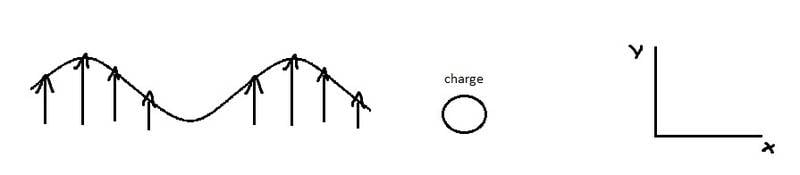
The bending of light during refraction is primarily due to the interaction of electromagnetic (EM) waves with charged particles in a material. When light enters a medium with a different refractive index, it travels at a slower speed, causing a change in direction. This phenomenon is quantitatively described by the index of refraction, defined as n=c/v, where c is the speed of light in a vacuum and v is the speed in the medium. Additionally, momentum conservation plays a role, as the change in direction of light results in a minute kickback effect on the material.
PREREQUISITES
- Understanding of electromagnetic wave theory
- Familiarity with the concept of refractive index
- Basic knowledge of momentum conservation principles
- Awareness of atomic structure and electron behavior in materials
NEXT STEPS
- Research the mathematical derivation of Snell's Law
- Explore the concept of momentum in quantum mechanics
- Investigate experimental methods for measuring light's momentum in materials
- Study the behavior of light in different types of materials, such as conductors vs. insulators
USEFUL FOR
Physics students, optical engineers, and researchers interested in the behavior of light and its interaction with materials will benefit from this discussion.