SUMMARY
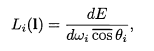
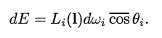
The discussion clarifies the meaning of the differential "d" in the context of differential quantities, specifically in the expression dE, which represents a small change in energy E. It emphasizes that dE quantifies how energy changes in response to a small change in another variable, such as dω_i, which denotes a small change in angular frequency. This relationship is crucial for understanding the sensitivity of physical systems to small perturbations in their parameters.
PREREQUISITES
- Understanding of basic calculus concepts, particularly differentiation.
- Familiarity with physical quantities such as energy (E) and angular frequency (ω).
- Knowledge of differential equations and their applications in physics.
- Basic grasp of mathematical notation used in physics, including differentials.
NEXT STEPS
- Study the principles of calculus, focusing on differentiation and its applications in physics.
- Explore the concept of differential equations and their role in modeling physical systems.
- Learn about the relationship between physical quantities and their differentials in classical mechanics.
- Investigate specific examples of how small changes in parameters affect system behavior in physics.
USEFUL FOR
Students of physics, educators teaching calculus-based physics, and anyone interested in the mathematical foundations of physical theories.