SUMMARY
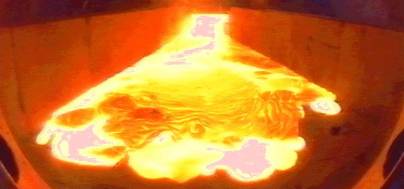
Molten corium, a mixture of nuclear fuel and structural materials, burns at temperatures estimated to be around 3000°C, with some discussions suggesting a potential upper limit of 3000 K. UO2, a primary component of corium, has a melting point of approximately 2800°C, while steel melts at 1450-1500°C. The actual behavior of corium can vary significantly based on factors such as the presence of coolant and pressure conditions, which influence heat transfer and melting characteristics.
PREREQUISITES
- Understanding of nuclear materials, specifically UO2 properties
- Knowledge of melting points of metals, including steel and iron oxide
- Familiarity with eutectic reactions and their implications
- Basic principles of thermodynamics related to heat transfer
NEXT STEPS
- Research the thermal properties of UO2 and its behavior under extreme conditions
- Explore the effects of coolant presence on molten corium behavior
- Study eutectic reactions and their relevance in high-temperature scenarios
- Investigate the thermal dynamics of materials under pressure in nuclear environments
USEFUL FOR
Nuclear engineers, materials scientists, safety analysts, and anyone involved in nuclear reactor design and safety assessments will benefit from this discussion.