Evo
- 24,114
- 3,277
That hawk was cool. I think I saw it while driving to work the other day about 2 miles from here, but it was too far away to tell.
Yes, it's beautiful. Very similar to what I saw, but my bird's head was a bit rounder and flatter. I'm trying to find the sketch I made of it.Andre said:Did you notice the Asian honey buzzard on the former page?
Evo said:Yes, it's beautiful. Very similar to what I saw, but my bird's head was a bit rounder and flatter. I'm trying to find the sketch I made of it.
That head is more like it. Also, see how the dark and light colors are on the head and no streaks near the eyes? No, if you changed the dark color to charcoal grey, and the light part solid white, you'd have my bird. Oh and give it a beautiful burnt orange on the underside of it's tail.Andre said:That could be because it's a juvenile specimen on the picture. here is a common European buzzard fully grown
But the colors are highly variable:
http://www.dungevalley.co.uk/Birds/buzzard.jpg
Probably they stop worrying about a next meal when a cat, fox or falcon or small hawk gets them because they are too slow because they are too fat.Evo said:Well, the doves got here a bit late. My next door neighbor also has a birdfeeder. These doves are so fat they look more like feathered watermelons. Since it's ususally feast or famine for wild birds in the winter, will they continue to eat until they blow up? Or does some mechanism kick in and tell them they don't have to worry about the next meal and stop gorging at some point?

Evo said:Ah, the notagoshawk.

I remember that.Ivan Seeking said:Ah yes, we used to pull that one in Scouts, but we called them snipes.
http://en.wikipedia.org/wiki/SnipeA Snipe is any of nearly 20 very similar wading bird species in three genera in the family Scolopacidae. They are characterised by a very long slender bill and cryptic plumage. The Gallinago snipes have a nearly worldwide distribution, the Lymnocryptes Jack Snipe is restriced to Asia and Europe and the Coenocorypha snipes are restriced to New Zealand. The three species of painted snipe are not closely related to these, and are placed in their own family, the Rostratulidae.
Astronuc said:Probably they stop worrying about a next meal when a cat, fox or falcon or small hawk gets them because they are too slow because they are too fat.
 They probably look fatter than they really are because they can fluff out their feathers to trap more warm air in them on cold days. The notagoshawk probably doesn't care either way.
Is that what it is? That makes sense, they're bodies are so disproportionate to the heads and you can't even see their legs. I was amazed they could walk. I felt a bit guilty about feeding them.Moonbear said:
Evo said:That head is more like it. Also, see how the dark and light colors are on the head and no streaks near the eyes? No, if you changed the dark color to charcoal grey, and the light part solid white, you'd have my bird. Oh and give it a beautiful burnt orange on the underside of it's tail.
Astronuc said:I remember that.
When I was in Boy Scouts, some senior scouts tried to pull that on us. Of course, knowing that snipes are wading birds precluded me for falling for that, since there were no snipes in the E. Texas woodlands where we were.
http://en.wikipedia.org/wiki/Snipe
I read a lot of science books when I was very young, and I've always been interested in and fascinated by birds.
Evo said:Is that what it is? That makes sense, they're bodies are so disproportionate to the heads and you can't even see their legs. I was amazed they could walk. I felt a bit guilty about feeding them.
You should see our Gambel's quail. I keep teasing my wife about the fact that you cannot see the feet for the fat bellies. It is just fluff to keep out the cold. But boy are they cute - very unlike Mt. Gigundo The Pig-eon in the picture above.Originally Posted by Evo
Is that what it is? That makes sense, they're bodies are so disproportionate to the heads and you can't even see their legs. I was amazed they could walk. I felt a bit guilty about feeding them.
Da Boid left it's perch in the tree and soared off. I can't recall if it flapped it's wings, maybe once. The tail was spread out and caught the suns rays which shone through and highlighted the beautiful burnt orange color. It was breathtaking. I see hawks every day, I see buzzards everday. I've never seen anything like this bird.jim mcnamara said:If it is an Accipiter (goshawk, sparrowhawk, sharp-shinned, Cooper's etc), the flight pattern is distinctive. They fly low to the ground, kind of hedge-hopping. Other hawks soar, catching currents up in the air, always flying above the trees, not flapping along dodging trees and shrubs.
Next time da boid (since you seem to be in a citified area, let's use a citified term)returns, note how da boid flies, and remember the shape of the tail feathers and when in flight. With those two bits-o-bird lore, we can get you pretty close to a species name for da boid.

[/URL] Nice! Now would you be allowed to do small raised bed along the border of the patio? Or one of those large flower boxes? The only problem with flower boxes is the deterioration due to weather (freezing and thawing is not good).Evo said:Ok, a squirrel picture for MIH and a patio picture for Astronuc
The squirrel turned around just as I went to take it's picture.
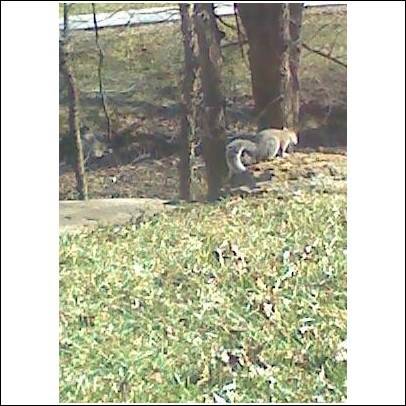
My patio from my bedroom window.
http://img412.imageshack.us/img412/9198/patiofrombedroomwindowlu8.jpg
Great bird pictures Andre! We're thinking it's a red tail, mine had such different features and coloring though, but apparently the only feature they need in common is the tail.Andre said: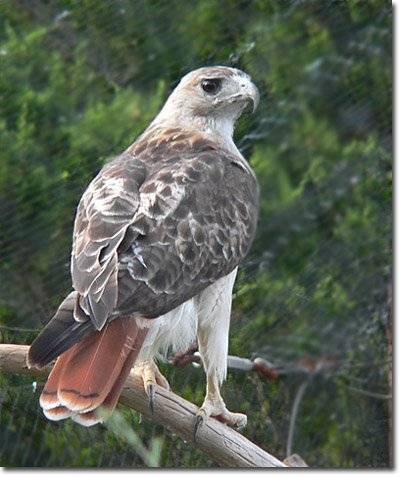
Red-tailed Hawk?
(Buteo jamaicensis)
Is the burnt orange color on the tail?Evo said:The tail was spread out and caught the suns rays which shone through and highlighted the beautiful burnt orange color.