Discussion Overview
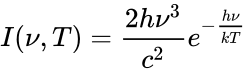
The discussion centers around the naming conventions of physical constants and laws, specifically why Planck's constant (##h##) is not referred to as Wien's constant, and the historical context of the contributions of Max Planck and Wilhelm Wien to the field of black-body radiation and quantum theory. Participants explore the implications of naming in physics, the derivation of Wien's law, and the relationship between classical and quantum theories.
Discussion Character
- Debate/contested
- Historical
- Conceptual clarification
Main Points Raised
- Some participants question why ##h## is not known as Wien's constant, suggesting that Wien used the wrong distribution function while acknowledging Planck's correct application.
- Others argue that naming conventions in physics often do not reflect the original discoverer, citing tradition and the complexity of credit assignment.
- A participant mentions that Wien's formula was derived from assumptions that do not incorporate the concept of quantization, which Planck introduced.
- There are claims regarding Wien's methodology, with some participants expressing uncertainty about how he arrived at the energy-frequency relationship ##h\nu=E##.
- Several participants express skepticism about the clarity and validity of Wien's derivation, suggesting that it lacks the foundational principles of quantum theory that Planck later established.
- Some participants reference the historical context of the development of quantum mechanics and the contributions of both Wien and Planck, noting the evolution of understanding in the field.
- Discussions include references to specific papers and the challenges of interpreting historical scientific texts.
Areas of Agreement / Disagreement
Participants do not reach a consensus on the appropriateness of naming ##h## as Wien's constant, with multiple competing views on the contributions of Wien and Planck, and the implications of their work on the development of quantum theory.
Contextual Notes
Participants express uncertainty regarding the derivation processes used by Wien and the implications of his assumptions. There is also mention of the historical context and the evolution of scientific understanding, which may affect interpretations of contributions.