High School Why one substance does not pass through another substance?

  • Thread starter Thread starter obiscr
  • Start date Start date
  • Tags Tags
    Classic physics
Click For Summary
The discussion centers on why solid objects, like a book and a desk, do not pass through each other despite being composed of atomic cores and electrons. It explains that the outer electrons of the objects repel each other, preventing them from overlapping. When a book is placed on a desk, both materials deform slightly due to the forces involved, but they do not embed into each other because breaking chemical bonds requires significant energy. The conversation also touches on how liquids can pass through porous materials due to weaker bonds between liquid molecules and the solid structure. Ultimately, the phenomenon observed in everyday life is that a book can rest stably on a desk without embedding into it.
obiscr
Messages
3
Reaction score
2
TL;DR
The problem of nuclei passing through each other.
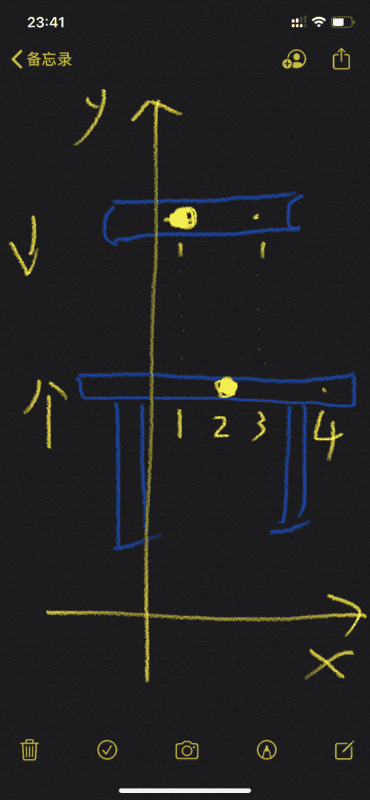
1. Books and desks have only one atomic core
IMG_0970.PNG


There is a book and desk, suppose the book and desk are composed of atomic atomic core and extranuclear electrons.

Now, the book moves down along the y axis, while the desk stands still or moves up.

Now there is a problem: the position of the x-axis corresponding to the atomic core of the book is 1, and the position of the x-axis corresponding to the outer electron of the book is 3; the position of the x-axis atomic core corresponding to the desk is 2, and the x-axis corresponding to the desk outside the atomic core The position of the electron is 4. In this case, the book and the desk will pass through each other, and the book will not be stably placed on the desk.

The above is when there are few atomic core in books and desks.

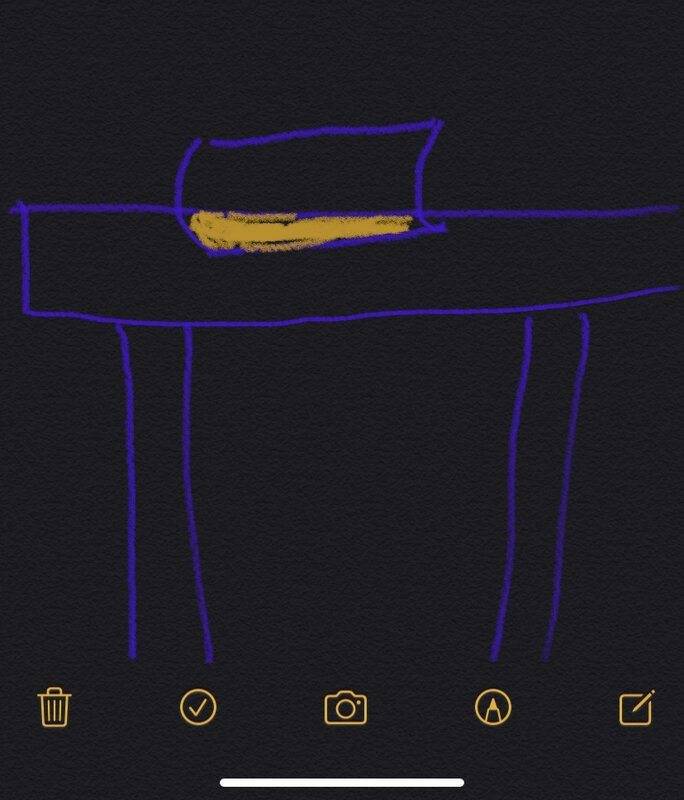
2. Books and desks have multiple atomic core
IMG_0979.jpg

Assuming that there are many atomic core in the book and desk, the possibility of collision between the atomic core in the book and desk is also greater. At this time, this situation will occur: a part of the atomic atomic core collides, and the force generated between the atomic atomic core overcomes the universal gravitation, which makes the book unable to move down along the y axis. The phenomenon is that the book is inlaid on the table. Of course, the depth of the inlays may not be the same, and at the same time they are unlikely to pass through each other.

But what we encounter in the real world is that the book can be stably placed on the table. There will never be a situation where a book is embedded in a table.

I have always been curious about why this is, and I don’t know if anyone can answer this question. Is there a problem with my way of understanding this question?

Thank you!
 
Last edited:
  • Like
Likes Delta2
Physics news on Phys.org
Welcome to PF.
That is a good question.

There are many atomic cores, but they are very small and on the inside. The atomic cores never meet. The outer electrons of one object first meet and repel the outer electrons of the other. That is the normal situation for books on desks in Earth's gravity.

Solid materials are elastic. When you place a book on a desk, they both deform slightly due to the forces on the objects. A book does sink into a desk. https://en.wikipedia.org/wiki/Young's_modulus

A solid material is a network of strong chemical bonds that connect the atoms and maintain the shape of the solid material. Books and desks are usually made from cellulose which is a polymer chain, strong enough to keep trees standing.

As two solid materials are increasingly forced together, if the bonds do not all break so the structure collapses, then the objects may become welded together.

In order for one solid bonded object to fall through another it is necessary to first break half of the chemical bonds. That will take a huge amount of energy. As one object passes through the other they will form a chemical compound, an alloy or a flowing liquid. What remains will be the original material, but will not be in the shape of the original objects.
 
  • Informative
  • Like
Likes berkeman, obiscr, Klystron and 4 others
obiscr said:
The phenomenon is that the book is inlaid on the table. Of course, the depth of the inlays may not be the same, and at the same time they are unlikely to pass through each other.

But what we encounter in the real world is that the book can be stably placed on the table. There will never be a situation where a book is embedded in a table.
Suppose that there is wet paint or glue on the table. Then as you press the book on the table, molecules of the paint pass into the book. As the paint, lacquer or glue dries, would you call the book embedded in the table/paint layer which is part of the table?
 
  • Wow
Likes Delta2
snorkack said:
Suppose that there is wet paint or glue on the table. Then as you press the book on the table, molecules of the paint pass into the book. As the paint, lacquer or glue dries, would you call the book embedded in the table/paint layer which is part of the table?
Yes, I think it might be like this on a microscopic level.
 
  • Like
Likes Delta2
obiscr said:
Yes, I think it might be like this on a microscopic level.
The thing here is that you can pass a liquid through a sieve, cloth, paper etc. and have the liquid reconstitute on the other side because the atoms in the individual sieve threads, cloth or paper fibres are more strongly bonded to other atoms in the fibre and less strongly to the atoms of the fluid between the threads.
In order to pass through microscopic solid, like activated carbon or silica gel, the solid needs bonds that are stronger than bonds to the percolating fluid.
 
  • Like
Likes obiscr
snorkack said:
The thing here is that you can pass a liquid through a sieve, cloth, paper etc. and have the liquid reconstitute on the other side because the atoms in the individual sieve threads, cloth or paper fibres are more strongly bonded to other atoms in the fibre and less strongly to the atoms of the fluid between the threads.
In order to pass through microscopic solid, like activated carbon or silica gel, the solid needs bonds that are stronger than bonds to the percolating fluid.
Got it. Thanks!
 
Thread 'Unexpected irregular reflection signal from a high-finesse cavity'
I am observing an irregular, aperiodic noise pattern in the reflection signal of a high-finesse optical cavity (finesse ≈ 20,000). The cavity is normally operated using a standard Pound–Drever–Hall (PDH) locking configuration, where an EOM provides phase modulation. The signals shown in the attached figures were recorded with the modulation turned off. Under these conditions, when scanning the laser frequency across a cavity resonance, I expected to observe a simple reflection dip. Instead...

Similar threads

  • · Replies 1 ·
Replies
1
Views
2K
Replies
4
Views
3K
  • · Replies 15 ·
Replies
15
Views
10K
  • · Replies 28 ·
Replies
28
Views
4K
  • · Replies 19 ·
Replies
19
Views
5K
  • · Replies 25 ·
Replies
25
Views
862
  • · Replies 2 ·
Replies
2
Views
4K
  • · Replies 11 ·
Replies
11
Views
3K
  • · Replies 2 ·
Replies
2
Views
2K
  • · Replies 42 ·
2
Replies
42
Views
7K