Water chiller using vacuum

Join the discussion
Registration is free. Ask a follow-up in this thread, or start your own.
10 replies · 575 views
vacuum_theory
Messages
6
Reaction score
0
TL;DR
Does using a Lilly impeller create space for vacuum accumulation in an inverted vacuum chamber half submerged in water?
With the goal of using off the shelf items to make something similar to Viktor Schauberger's water vortex structuring machine, will this setup work?
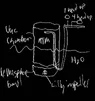
The setup is an inverted 5 gallon vacuum chamber half submerged in water with vacuum applied while running a Lilly impeller pump in a bowl below the vacuum chamber. The vacuum pumps to be used are single head diaphragm pumps connecting four in series to create deeper vacuum and parallel for increasing flow rate.
 
Attachments
  • SmartSelect_20261002-082801_Samsung Notes.webp
    SmartSelect_20261002-082801_Samsung Notes.webp
    47.7 KB · Views: 1
  • Schauberger_device-296x432.webp
    Schauberger_device-296x432.webp
    19.7 KB · Views: 1
  • 414b11b7a1d89227cc060f2d4a0f50e5943cb1a54fc46303f41f4a3fa50d1019.webp
    414b11b7a1d89227cc060f2d4a0f50e5943cb1a54fc46303f41f4a3fa50d1019.webp
    57.4 KB · Views: 1
Physics news on Phys.org
Welcome to PF.

vacuum_theory said:
Viktor Schauberger's water vortex structuring machine
From a quick Google search on that phrase, his work appears to be crackpottery. What is your goal in trying to make this unit?

Also, we do not allow AI as a reference in the technical forums, so your 3rd attachment will likely be deleted, modulo your response to my first question.
 
berkeman said:
Welcome to PF.


From a quick Google search on that phrase, his work appears to be crackpottery. What is your goal in trying to make this unit?

Also, we do not allow AI as a reference in the technical forums, so your 3rd attachment will likely be deleted, modulo your response to my first question.
Hello Berkeman,
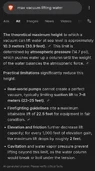
Thank you for the response. I understand references to Viktor Schauberger invoke skepticism. The goal making this unit is to create an alternative chiller device for hydrotherapy/cold plunge. Typically cold plunge setups with aquarium chillers are are expensive and require chemicals to keep the water clean. Alternatively, using vacuum to boil and chill the water would be a two in one, cheaper option. Regarding the AI screenshot, this reference came about after feeding prompts to Brave browser's AI regarding this vortex vacuum setup, it's more of an illustration of the desired affect, water vortexing while vacuum is applied above.
 
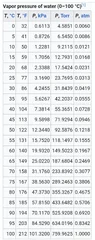
When pressure is below atmospheric, water boils at various vapor pressures and uses its own energy in the process, the loss of energy causes cooling.
 
Attachments
  • SmartSelect_20261001-153007_Brave.webp
    SmartSelect_20261001-153007_Brave.webp
    103.4 KB · Views: 1
vacuum_theory said:
When pressure is below atmospheric, water boils at various vapor pressures and uses its own energy in the process, the loss of energy causes cooling.
Ah, yes, that is true. https://en.wikipedia.org/wiki/Vacuum_cooling

vacuum_theory said:
The goal making this unit is to create an alternative chiller device for hydrotherapy/cold plunge. Typically cold plunge setups with aquarium chillers are are expensive and require chemicals to keep the water clean. Alternatively, using vacuum to boil and chill the water would be a two in one, cheaper option.
What is the "vortex" part all about? Is that supposed to increase the efficiency somehow?
 
berkeman said:
Ah, yes, that is true. https://en.wikipedia.org/wiki/Vacuum_cooling


What is the "vortex" part all about? Is that supposed to increase the efficiency somehow?
This company I am researching provides an explanation on the dynamics of vortexing water. Waiting on a reply from them regarding closed loop cooling through their heart water vortexing device. Vortexing explained:
[questionable link redacted by the Mentors]
 
Last edited by a moderator:
vacuum_theory said:
This company I am researching provides an explanation on the dynamics of vortexing water. Waiting on a reply from them regarding closed loop cooling through their heart water vortexing device.
Vortex cooling of air or a gas, is well established and widely used.
https://en.wikipedia.org/wiki/Vortex_tube

I see no way that a liquid, such as water alone, could be cooled by passage through a vortex or an eddy in a two port chamber. Since the two ports are the same size, the water velocity will be the same at inlet and outlet. If anything, the water would be heated by the internal turbulence, the heat energy flux in watts, being the product of the differential pressure in pascals, by the volumetric flow in m3/s.

The linked [questionable link redacted by the Mentors] website raises many red flags, that tell me it is bunkum. There will be new-age crystal healers who swear by it. For the true believers, the placebo effect may well be worth the investment.
 
Last edited by a moderator:
Thank for the reply and the possible debunking. It seems skeptical that vortexing water alone would create cooling/structured water. That's why the OP design uses vacuum for cooling. The vortex effect is to distribute/circulate the cooled water, as this design is intened to cool 100 gallons using a 5 gallon vacuum chamber. The cooled water is created by getting the water surface inside the vacuum chamber to the target vapor pressue. The question is, does this setup need a 10 meter manometer, or will the vortex assist in propagating a local pocket for vapor pressure to develop before being pumped out to the vacuum exhaust? The concern is that as vacuum is applied inside the chamber, and the water level will rise to the top until the entire space is evacuated of gas/atmosphere. At this point the diaphragm vacuum pumps would become water pumps. An alternative setup with a manometer taller than the maximum lift abilities of using vacuum vs. atmosphere. Though more complicated, may be necessary to make a functioning device.
 
Attachments
  • SmartSelect_20261003-124031_Brave.webp
    SmartSelect_20261003-124031_Brave.webp
    120.6 KB · Views: 1
Baluncore said:
Vortex cooling of air or a gas, is well established and widely used.
https://en.wikipedia.org/wiki/Vortex_tube

I see no way that a liquid, such as water alone, could be cooled by passage through a vortex or an eddy in a two port chamber. Since the two ports are the same size, the water velocity will be the same at inlet and outlet. If anything, the water would be heated by the internal turbulence, the heat energy flux in watts, being the product of the differential pressure in pascals, by the volumetric flow in m3/s.

The linked [questionable link redacted by the Mentors] website raises many red flags, that tell me it is bunkum. There will be new-age crystal healers who swear by it. For the true believers, the placebo effect may well be worth the investment.
Thanks for sharing the cooling by vortexing, seems to good to be true even for air. The most effective way to cool water may be vacuum.
 
Attachments
  • SmartSelect_20261003-125118_Brave.webp
    SmartSelect_20261003-125118_Brave.webp
    90.3 KB · Views: 1
  • SmartSelect_20261003-125437_Brave.webp
    SmartSelect_20261003-125437_Brave.webp
    123.3 KB · Views: 1
vacuum_theory said:
The cooled water is created by getting the water surface inside the vacuum chamber to the target vapor pressue. The question is, does this setup need a 10 meter manometer, or will the vortex assist in propagating a local pocket for vapor pressure to develop before being pumped out to the vacuum exhaust?
The water vapour, or cold steam, at the top of a 10-metre manometer will be at the same temperature as the manometer wall, or the water in the tube. As a vertical column water barometer is activated, by opening the water valve at the base, the water level will fall, but the water vapour or steam that immediately forms at the head of the water column will remain at the same temperature as the water in the column. You are not expanding and cooling a fixed volume of gas, you are filling a chamber by boiling water at the rate required to fill the space at that temperature.

There is a pressure at which water boils, determined by temperature. That is the vapour pressure of water. If you draw water vapour from a closed container, more water will boil off as steam, stabilising the pressure at that temperature. The water that boils will be from the liquid surface, as the deeper water below is under greater hydrostatic pressure. If you then create a rotation in the water about the vertical axis, the liquid surface will take up a parabolic shape, but the volumes of water and steam will not change. Within the container, we can assume the same pressure and temperature exists across the entire liquid-gas contact surface.

An air drier can operate by cooling a flow of air, then pumping out the liquid water that condenses, before allowing the air to warm again. The cooling and the warming of the air can be done efficiently in a counter-flow heat exchanger. The pressure can remain close to constant throughout the air flow. The liquid water that is pumped out will be at the temperature of the cold chamber, but you will need to pay for the cooling of the chamber, and of the liquid water that is extracted. The minimum partial pressure of water possible is about 0.611 kPa, or 0.089 psi, set by ice formation that may block the air flow through the cold chamber at 0°C.