Admin
- 69,801
- 25,667
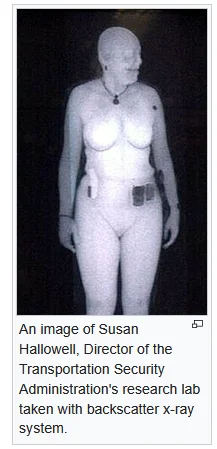
This is interesting. I saw the use of this on a law enforcement TV show that I watch -- using a small x-ray device that relies on backscatter rather than transmission, so it can be used in situations where you can't easily put a recording target on the other side of what you want to image.
https://www.vikendetection.com/
https://en.wikipedia.org/wiki/Backscatter_X-rayBackscatter X-ray
Backscatter technology produces an image that resembles a chalk etching.[1]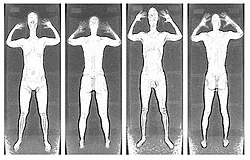
Backscatter X-ray is an advanced X-ray imaging technology. Traditional X-ray machines detect hard and soft materials by the variation in x-ray intensity transmitted through the target. In contrast, backscatter X-ray detects the radiation that reflects from the target. It has potential applications where less-destructive examination is required, and can operate even if only one side of the target is available for examination.
The technology is one of two types of whole-body imaging technologies that have been used to perform full-body scans of airline passengers to detect hidden weapons, tools, liquids, narcotics, currency, and other contraband. A competing technology is millimeter wave scanner. One can refer to an airport security machine of this type as a "body scanner", "whole body imager (WBI)", "security scanner" or "naked scanner".[2]
https://www.vikendetection.com/