Mohammad Danial
- 1
- 0
1. Introduction
Pressure of a fluid exerts thrust on each part of a surface with which the fluid made contact. Each forces distributed over the area have a resultant magnitude and direction that is very crucial. For a horizontal surface, the pressure does not vary over the plane. Thus, the total force is the product of the pressure and the area. Its direction is perpendicular to the plane. But if the surface is not horizontal, the pressure varies at each point of the surface. Thus, the calculation of the total thrust is different.
2. Homework Statement
To determine the hydrostatic thrust acting on a plane surface immersed in water. Besides that, identify the position of the line of action of the thrust
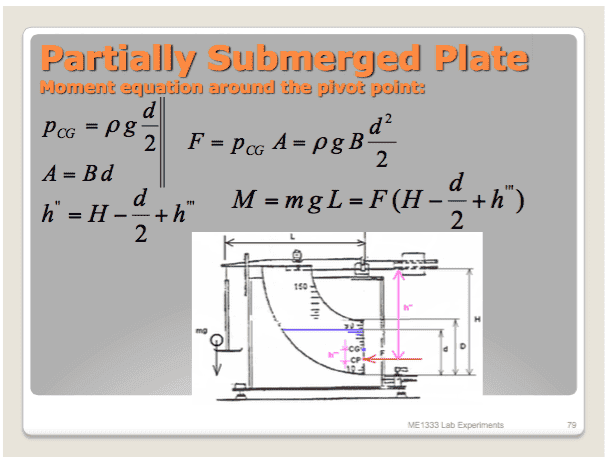
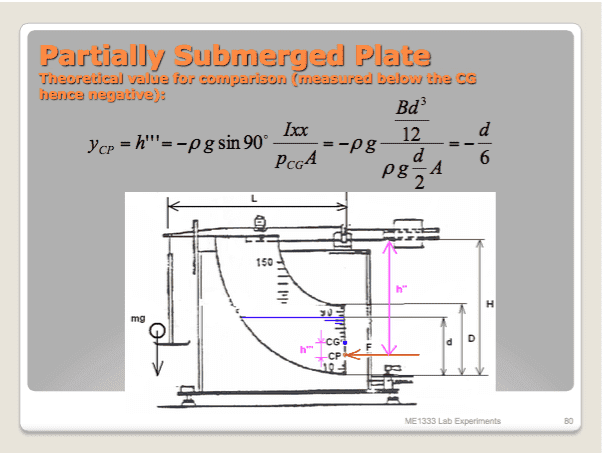
i don't get it how to get h''' especially the part sin 90( Ixx/Pcg A ). I would really appreciate it if someone can give me some guidance to understand it. Thank you
Pressure of a fluid exerts thrust on each part of a surface with which the fluid made contact. Each forces distributed over the area have a resultant magnitude and direction that is very crucial. For a horizontal surface, the pressure does not vary over the plane. Thus, the total force is the product of the pressure and the area. Its direction is perpendicular to the plane. But if the surface is not horizontal, the pressure varies at each point of the surface. Thus, the calculation of the total thrust is different.
2. Homework Statement
To determine the hydrostatic thrust acting on a plane surface immersed in water. Besides that, identify the position of the line of action of the thrust
Homework Equations
i don't get it how to get h''' especially the part sin 90( Ixx/Pcg A ). I would really appreciate it if someone can give me some guidance to understand it. Thank you