SUMMARY
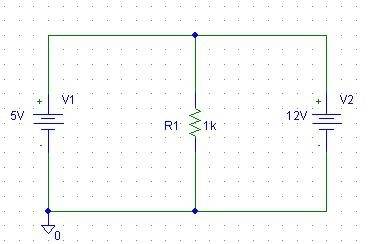
Connecting batteries in parallel with differing voltages, such as a 12V battery with 3 ohms internal resistance and a 5V battery with 2 ohms resistance, is highly inadvisable. This configuration can lead to reverse current flow, potentially causing the lower voltage battery to overheat and catch fire. Ideal voltage sources should not be connected in parallel unless their output voltages are closely matched, as this can result in large currents that damage the batteries. In practical applications, batteries should be connected in series or current sources in parallel to avoid these issues.
PREREQUISITES
- Understanding of battery chemistry and behavior
- Knowledge of electrical circuit theory
- Familiarity with Ohm's Law and Kirchhoff's laws
- Basic principles of voltage and current in electrical systems
NEXT STEPS
- Research the implications of connecting batteries in series versus parallel
- Learn about battery management systems (BMS) for safe operation
- Study the Nernst equation and its relevance to battery chemistry
- Explore dual-battery systems in vehicles for practical applications
USEFUL FOR
Electrical engineers, hobbyists working with battery systems, and anyone interested in safe battery configurations and electrical circuit design.