Bolt screw shear strength calculations

Join the discussion
Ask a follow-up here, or get your own question answered by working scientists, mathematicians and engineers — people, not an autocomplete.
Real named experts · corrections over time · the nuance an AI answer skips
1 reply · 4K views
dislect
Messages
163
Reaction score
0
Hi guys,

I have an electric motor that comes with a flange to be bolted on a plate horizontally so that the 4 screws carry the weight of the motor and the momentum it creates on them.

Could you direct me to how to calculate if the given screws and nuts stand up to the load?
Perhaps an example of a solution to such problem to learn from?
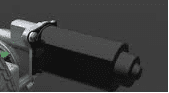
3123.png
Thank you,
Sharon
 
Physics news on Phys.org
The bolts should act only in tension. They should create sufficient frictional force between the flanges, and this frictional force should fully carry the actual loads. If the loads are enough to overcome this frictional force, then there will be relative movement between the flanges, and the bolts will loosen and the whole thing will fail.

I would first find out how strong the screws are and how much force they can exert when fully tightened. This is a google search away. Also, I would find out the friction coefficient between the mounting flanges. From this you can figure the frictional force between flanges.

If this frictional force is greater than the weight of the motor, plus the torque of the motor, plus other effects (such as the fact that the motor appears to be cantilevered), and a safety factor, then there should be no problems.