SUMMARY
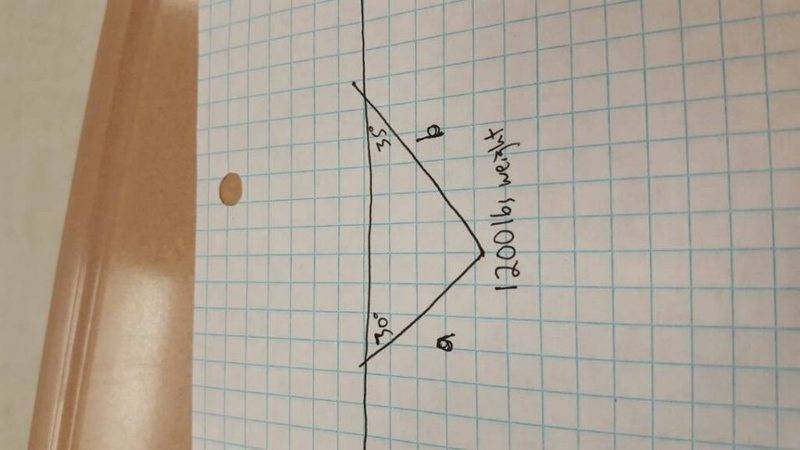
The discussion revolves around calculating the tensions in two wires supporting a 1200 lbs weight at angles A = 35 degrees and B = 30 degrees. The user struggles with the equations, specifically using x = (-ycos35/cos150) and x = (-ycos35/cos180), leading to confusion regarding vector analysis and the application of the angle theorem. The consensus indicates that while the Pythagorean theorem is often applicable, the complexities of tension require a more nuanced understanding of vector components and equilibrium conditions.
PREREQUISITES
- Understanding of vector components in physics
- Knowledge of trigonometric functions and their applications
- Familiarity with the Pythagorean theorem
- Basic principles of equilibrium in static systems
NEXT STEPS
- Study vector resolution techniques in physics
- Learn about static equilibrium and force diagrams
- Explore the application of trigonometric identities in tension calculations
- Review examples of tension problems involving multiple angles and weights
USEFUL FOR
High school physics students, educators teaching precalculus concepts, and anyone interested in understanding the principles of tension in static systems.