Can i cause NMR with a simple slayer exiter (Tesla coil)?

Click For Summary

Discussion Overview

The discussion revolves around the feasibility of using a Slayer exciter circuit, a simplified version of a Tesla coil, to achieve nuclear magnetic resonance (NMR) in water and to explore related phenomena such as the Zeeman effect. Participants are examining the characteristics of the magnetic field produced by the circuit and its potential applications in experimental physics.

Discussion Character

  • Exploratory
  • Technical explanation
  • Debate/contested

Main Points Raised

  • One participant questions the strength of the magnetic field generated by the Slayer exciter and whether it can ionize gases like neon or argon.
  • Another participant inquires if the magnetic field could be strong enough to induce NMR in water, specifically asking about the ability to flip proton spins.
  • There is a discussion about the requirements for NMR, including the necessary magnitude of magnetic fields and the frequencies involved.
  • One participant suggests that the electric field is responsible for ionization rather than the magnetic field, and expresses skepticism about the strength of the B-field produced by a small air-core transformer.
  • A later reply references the principles of NMR, noting that the RF frequencies required for perturbation are likely beyond the capabilities of the Slayer exciter circuit.
  • Participants discuss the relationship between electric fields and magnetic fields in the context of the Slayer exciter's operation.

Areas of Agreement / Disagreement

Participants express differing views on the capabilities of the Slayer exciter in relation to NMR and the Zeeman effect. There is no consensus on whether the magnetic field produced is sufficient for these phenomena, and the discussion remains unresolved regarding the practical applications of the circuit in this context.

Contextual Notes

Participants highlight limitations in available information about the Slayer exciter circuit, including its frequency and electric field magnitude, which may affect the discussion on its potential for NMR and related effects.

patric44
Messages
308
Reaction score
40
hello guys

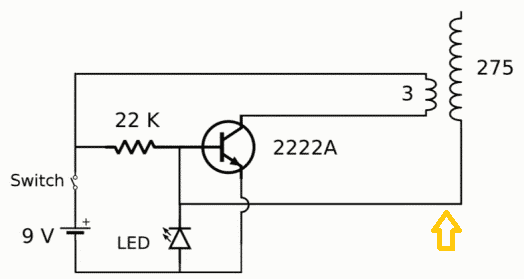
i saw a slayer exciter circuit , witch is the crude more simpler version of the tesla coil
and i made it , it works quite well but i have some questions.
wF6ZyAd.png


some questions :

1 - how strong is the magnetic field caused by this tesla coil ? it can ionize neon gas , or argon ?
2 - i thought i would do some experiments with it and iam wodering can it cause NMR for water ?
3 - can it cause an observable zeeman effect i could detect with a spectrometer ?
 

Attachments

  • b64nO.png
    b64nO.png
    8.7 KB · Views: 1,008
Physics news on Phys.org
any help !
 
patric44 said:
any help !

Well since you have "I" tagged your thread for university undergraduate education level
what research have you done so far ?
 
davenn said:
Well since you have "I" tagged your thread for university undergraduate education level
what research have you done so far ?

well, iam at my second year in collage so , don't have any researches yet.
but what's the big deal with the "i" !
i don't understand why you are bothered by the tag i did , insted of trying to help me with the question it self ?!
 
patric44 said:
but what's the big deal with the "i" !
i don't understand why you are bothered by the tag i did , insted of trying to help me with the question it self ?!
Because we expect folks to do some work on their own first to try to answer their question. We're happy to help if it's obvious that you have been doing some reading about this, and are stuck on one or two details.

What are the requirements for NMR? What magnitude of B-fields (AC, DC)? What frequencies are involved?

And isn't the point of a Tesla coil to make high voltages and electric fields? The B-field used in the transformer would seem to be secondary to that purpose (pardon the pun)...
 
berkeman said:
Because we expect folks to do some work on their own first to try to answer their question. We're happy to help if it's obvious that you have been doing some reading about this, and are stuck on one or two details.

What are the requirements for NMR? What magnitude of B-fields (AC, DC)? What frequencies are involved?

And isn't the point of a Tesla coil to make high voltages and electric fields? The B-field used in the transformer would seem to be secondary to that purpose (pardon the pun)...

first thank you berkeman

i tried to do some "work " but there is nothing online showing any details about the slayer exiter circuit exept it producing
a high frequency law current AC volage , there is no information about the frequency , the magnetude of the electric field ...
so i thought anyone here would have an idea.

perhaps my NMR question was not clear , iam was just asking can the magnetic field be strong enough to cause the proton in the water to flip its spin ?
or do some sup atomic effects like the zeeman effect ? or any thing usefull ?

"And isn't the point of a Tesla coil to make high voltages and electric fields? The B-field used in the transformer would seem to be secondary"

i think it has a relativly strong magnetic field i have been able to ionize neon gas in an indicator , and argon gas ?!
 
patric44 said:
i have been able to ionize neon gas in an indicator , and argon gas ?!
It's the electric field that is doing the ionization, not the B-field. With a small air-core transformer, I would not expect the B-field to be very strong. I'll have to review NMR a bit to be able to comment on what the minimum field strengths are...
 
From: https://en.wikipedia.org/wiki/Nuclear_magnetic_resonance
The principle of NMR usually involves two sequential steps:

  • The alignment (polarization) of the magnetic nuclear spins in an applied, constant magnetic field B0.
  • The perturbation of this alignment of the nuclear spins by employing an electro-magnetic, usually radio frequency (RF) pulse. The required perturbing frequency is dependent upon the static magnetic field (H0) and the nuclei of observation.
The RF frequencies used for the varying B-field are well above where your Slayer Exciter circuit is running, and the DC and AC B-fields are much stronger than what you will get with the air-core transformer.

To observe the B-field at your frequencies, you could see how many turns of wire it takes to light up an LED. The E-field will not be able to light the LED, only the B-field piercing the LED coil will generate a differential current to light the LED. :smile:

https://cdn.instructables.com/F32/W36R/HZ6T96H4/F32W36RHZ6T96H4.MEDIUM.jpg
F32W36RHZ6T96H4.MEDIUM.jpg
 

Similar threads

  • · Replies 1 ·
Replies
1
Views
2K
  • · Replies 3 ·
Replies
3
Views
2K
  • · Replies 9 ·
Replies
9
Views
3K
  • · Replies 4 ·
Replies
4
Views
3K
  • · Replies 2 ·
Replies
2
Views
2K
  • · Replies 4 ·
Replies
4
Views
5K
  • · Replies 5 ·
Replies
5
Views
3K