Can You Solve This Capacitor Circuit Problem Using Q=CV?

Click For Summary
SUMMARY

The discussion centers around solving a capacitor circuit problem using the equation Q=CV, where Q represents the charge, C is the capacitance, and V is the voltage. Participants emphasize the importance of providing an initial attempt at a solution to facilitate effective assistance. The conversation highlights the necessity of understanding the relationship between charge, capacitance, and voltage in capacitor circuits.

PREREQUISITES
  • Understanding of capacitor fundamentals
  • Familiarity with the equation Q=CV
  • Basic circuit analysis skills
  • Knowledge of voltage and capacitance relationships
NEXT STEPS
  • Research advanced capacitor circuit problems
  • Explore practical applications of Q=CV in real-world circuits
  • Learn about series and parallel capacitor configurations
  • Study energy storage in capacitors and its implications
USEFUL FOR

Students studying electrical engineering, educators teaching circuit theory, and hobbyists interested in electronics and capacitor applications.

EDCJZ
Messages
1
Reaction score
0
New poster has been reminded to show their work on schoolwork problems.
Homework Statement
Help me please
Relevant Equations
Q=CV
Homework Statement: Help me please
Homework Equations: Q=CV
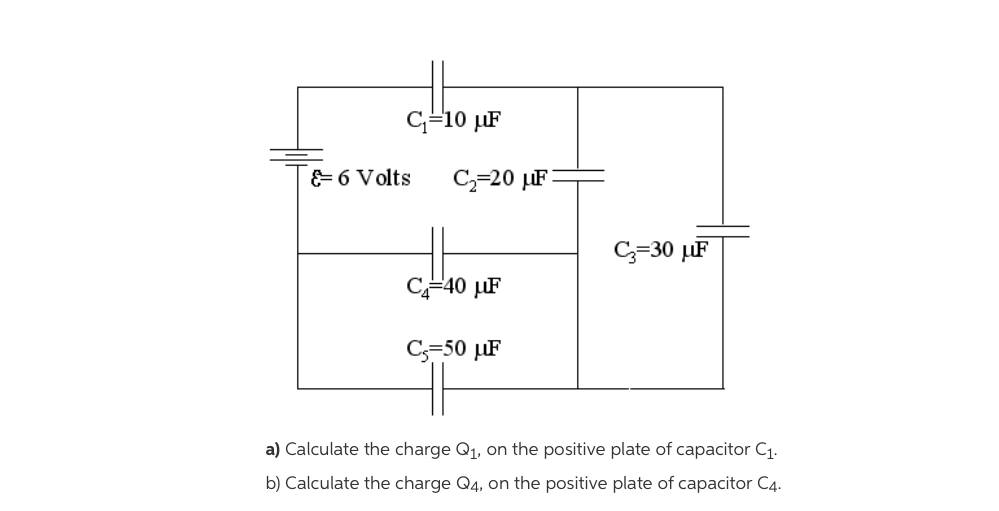
5CC6ED3D-B8D4-4D9D-A267-972315EC2B0B.jpeg
 
Last edited by a moderator:
Physics news on Phys.org
To get some help, you'll first have to provide an attempt at a solution.
 

Similar threads

  • · Replies 15 ·
Replies
15
Views
1K
Replies
9
Views
3K
  • · Replies 6 ·
Replies
6
Views
3K
  • · Replies 16 ·
Replies
16
Views
2K
Replies
6
Views
1K
  • · Replies 4 ·
Replies
4
Views
4K
  • · Replies 7 ·
Replies
7
Views
4K
Replies
11
Views
3K
  • · Replies 21 ·
Replies
21
Views
3K
Replies
11
Views
3K