Car Wing Design for Downforce: Efficiency Explored

Join the discussion
Ask a follow-up here, or get your own question answered by working scientists, mathematicians and engineers — people, not an autocomplete.
Real named experts · corrections over time · the nuance an AI answer skips
10 replies · 5K views
personage
Messages
4
Reaction score
0
Hi everyone,

Just out of curiosity,
Will this car wing design be effective in generating downforce?
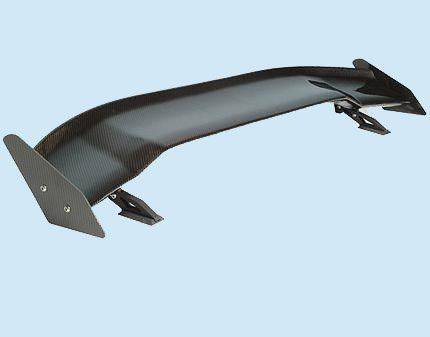
Wings_for_Car.jpg

I've done some research and read that downforce is essentially the opposite of lift, so a design of an upside down airplane wing would be effective in producing a downforce - yet this car wing looks like a right-side up airplane wing. Maybe I'm just seeing this wrong though :biggrin:

So the design should be kind of like this one.. Or would this one not work either?
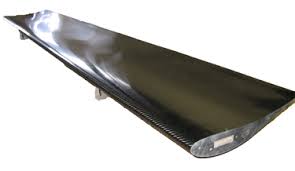
images?q=tbn:ANd9GcTmeswDi25ICwcSC_f6HrgDdfmUcB6F3UsF8Q7Gp_8Kwwzmxd8b.jpg


Thanks for your time!
 
Physics news on Phys.org
Hard to come up with any kind of informed speculation without more information, like a cross section of the wing. Best bet may be to order one from some place with a good return policy and mount it on load cells to measure what it does.
 
As MrSpeedybob says, it's impossible to say without doing some testing. All else being the same, if an airfoil produces lift then inverting it will produce downforce - but all else is never the same, or no airplane would be able to fly upside down and many can. On a car, a wing can produce lift or downforce, but it also changes the flow of air over other parts of the car, causing them to generate more or less lift/downforce. In any case, the angle of attack (which is usually adjustable) is at least as important as the shape of the airfoil.

Well-heeled racing teams use wind tunnels and very sophisticated computer simulations. Less well-heeled teams spend a lot of time on the track and the skidpad making adjustments and seeing what works. But the sad truth is that the downforce generated by most aftermarket bolt-on aerodynamic devices acts mostly upon the purchaser's bank account.
 
  • Like
Likes   Reactions: billy_joule
I suspect they are both designed to produce downforce. The cross section of the first one just isn't so obvious to see due to the end plates.

One thing to remember is that they rarely operate in free air. The air flow striking the wing is likely to be disturbed by the airflow over the car so the optimum angle of attack might look odd or perhaps not what you expect. The wing might need to have a twist in it if the airflow over the middle of the wing is at a different angle to the tips due to the shape of your car. In the early days wings were mounted very high up so they operated in clean air.

On a track/race car they are typically used to increase grip making cornering faster but at the expense of increased drag which reduces the top speed. It's a trade off. On ordinary roads you shouldn't be driving anywhere near the limit of adhesion so they are really just a bit silly and may increase fuel consumption.

More..
http://jalopnik.com/5659723/spoiler-alert-a-history-of-downforce
 
  • Like
Likes   Reactions: billy_joule
There was a study done on this at UCSC, the angle is one of the most important factors check it out
http://www.bvmotorsports.com/spoilers.html
 
personage said:
I've done some research and read that downforce is essentially the opposite of lift...

True in vernacular usage but the term lift has a technical definition in aeronautical engineering (aerodynamic force perpendicular to the relative wind) that differs from the colloquial meaning (force pointing up).
 
The answer is simply and absolutely yes, the spoiler pictured can generate downforce but if and only if it is mounted so it meets the air at a negative angle of attack. Notice that the rear edge of this spoiler is tilted up to give the departing airflow an upward tilt; according to Newton's 3rd law of motion, the act of boosting the air upwards will result in downward force on the spoiler.

However, as CWATTERS correctly pointed out above, this spoiler would not be operating in undisturbed air (especially were it mounted on the rear deck of a notchback sedan) so mere eyeball engineering isn't sufficient to insure that the effective angle of attack at the desired speeds is indeed going to be negative. While the profile of the spoiler might have some effect upon how efficient it is in terms of (negative) lift generated vs. drag created, (known as the L/D ratio) the angle of attack is the only thing that determines if and which direction force will be exerted.
 
Insanerb25 said:
There was a study done on this at UCSC, the angle is one of the most important factors check it out
http://www.bvmotorsports.com/spoilers.html
Correction its http://bvmotorsports.com/home/learn/aerodynamics/spoilers-wings/