Basic NMOS+Zener Current Source Test

Click For Summary
The discussion focuses on building a constant current source using NMOS and Zener diodes, acknowledging the inherent challenges in achieving perfect current stability. Participants share insights on circuit behavior, emphasizing that increasing VCC slightly raises VAC, which helps maintain current through the load. LTSpice is mentioned as a tool for simulation, with tips provided on rotating components and managing circuit configurations. The conversation also touches on the advantages of using integrated circuits like the LM317 for better regulation and stability in current sources. Overall, the thread highlights practical approaches and considerations for designing effective current sources in electronic circuits.
Helena Wells
Messages
125
Reaction score
9
TL;DR
Constant current source are quite difficult to be built.In this thread we discuss how.
I have been trying for a long time to build a costant current source which I know is impossible to keep the current exactly the same but as much as possible. This is what I have done so far:
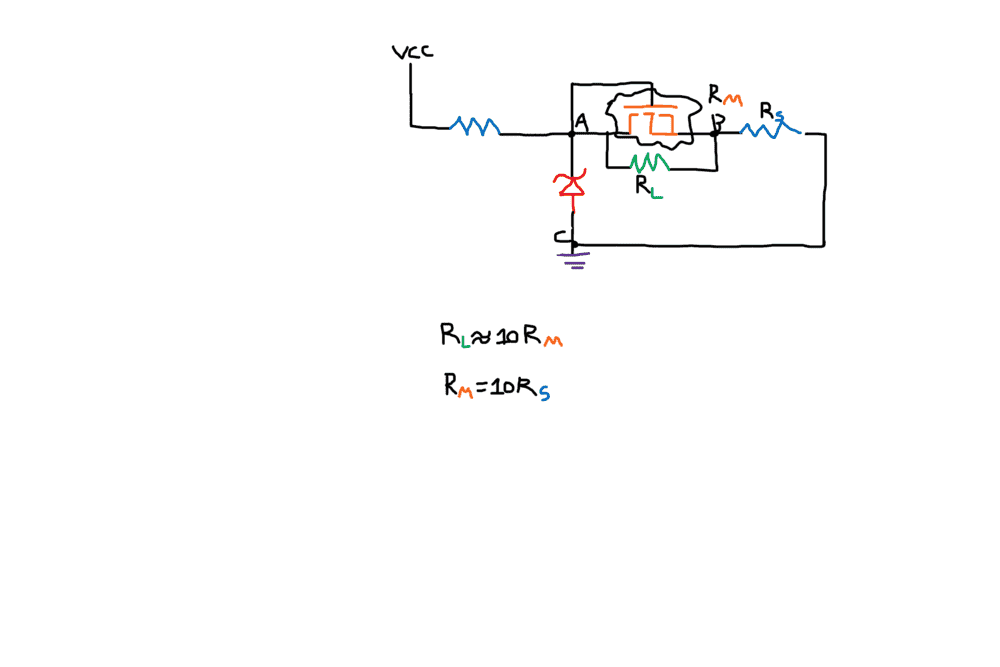
testa.png


The operation is very simple . If VCC is increased the VAC is increased a little bit. When VA is increased a little bit Rm is reduced a little bit and VB is increased a little bit-> current through RL remains more costant.I am using the phrases 'a little bit'because I can't calculate . Any help really appreciated.
 
Engineering news on Phys.org
There are many ways. What range of current; 1mA to 1 amp ?
What compliance, or supply voltage ?
How are you going with LTspice ?
 
I have download LTSpice but I don't know how to rotate things to set the opposite polarity of the zener diode.
 
1. Edit Menu, Move, or use the mouse to pick one of the hand tools that drag components or areas, either free, or with the tracks attached.
2. Select the component or area.
3. Then use <ctrl>R to rotate the selected object or area, or use <ctrl>E to mirror, or flip the symbol left-right.
 
Here's a couple of more standard variations for loads ground or high side referenced loads.

Also, a version of these that I used many times in industry with a linear regulator. This could be for either a high or ground referenced load. The IC version won't work well for low currents, because of the bias currents that have to flow through to IC. But it is small, cheap, and rugged.

20210209_141651.jpg

20210209_141808.jpg


edit: Oops! Typo in the LM317 circuit. The terminal I labeled "GND" should be "OUT".
 
DaveE said:
Here's a couple of more standard variations for loads ground or high side referenced loads.

Also, a version of these that I used many times in industry with a linear regulator. This could be for either a high or ground referenced load. The IC version won't work well for low currents, because of the bias currents that have to flow through to IC. But it is small, cheap, and rugged.

View attachment 277684
View attachment 277685

edit: Oops! Typo in the LM317 circuit. The terminal I labeled "GND" should be "OUT".
Thanks Dave!
 
Baluncore said:
1. Edit Menu, Move, or use the mouse to pick one of the hand tools that drag components or areas, either free, or with the tracks attached.
2. Select the component or area.
3. Then use <ctrl>R to rotate the selected object or area, or use <ctrl>E to mirror, or flip the symbol left-right.
Thanks !
 
Helena Wells said:
I have download LTSpice but I don't know how to rotate things to set the opposite polarity of the zener diode.
I had trouble with that too. What a pain to draw schematics, even simple ones, before I figured that out.
 
  • #10
The key point in all of these configurations is the portion shown below. The transistor is biased on with the drain-gate resistor. When the voltage drop across the zener reaches Vz, then the gate bias is diverted and the transistor starts to regulate the current in it's linear operating region. So when the voltage Vg(th) + Is⋅Rs = Vz the circuit is controlling the current to stay at the equilibrium value Is = (Vz - Vg(th))/Rs. You'll see variations of this circuit inserted in many configurations: high side, low side, different transistor types, and different polarities. But the basic concept is the same.

20210209_154110~2.jpg


edit: You can also think of this as a voltage regulator circuit if the load is Rs. Although, it's a pretty crummy one, for a bunch of reasons. As a current regulator, it isn't as accurate as the versions that use linear ICs (op-amps, etc.) since the voltage Vg(th) (or Vbe for BJTs) isn't very well controlled. For a DIY current source I also like the LM10 IC. It's an ancient chip with a low voltage reference (0.2V) and an op-amp. One of the problems with the others is that they drop a lot of voltage, which is fine if you have that much available.
 
Last edited:
  • #11
DaveE said:
and the transistor starts to regulate the current in it's linear operating region.

Don't you want to bias the MOSFET so that it is saturated? This way Ids is a function of Vgs and not Vds [1], and since Vgs is constant Ids is constant, hence a constant current source.

[1] I assume we can ignore the various non-idealities like channel length modulation.
 
  • #12
eq1 said:
Don't you want to bias the MOSFET so that it is saturated? This way Ids is a function of Vgs and not Vds [1], and since Vgs is constant Ids is constant, hence a constant current source.

[1] I assume we can ignore the various non-idealities like channel length modulation.
Not if I could control the transistor in it's linear region with better sensors, references and amplifiers external to the MOSFET. Yes, FETs can act like current sources. But we can do better with a current sensing resistor, a reference, and an op-amp. IC amplifiers are ubiquitous and cheap, which allows more of a systems level design approach. Outside of learning about device design/operation, in the real world, analog stuff is nearly always done with many transistors integrated in an IC. A device like the LM317 includes a good reference, a "good enough" amplifier and a power transistor with protection circuits, all in one device which costs about $0.50. If you can spend $4-$5 you'll want something like an LT3092 IC.

Even in the simple mosfet & zener circuit, I suspect that Vgs(th) is a more stable device characteristic than the saturated channel current source, although I haven't (maybe ever) looked into that. If you didn't want a sense resistor and a zener, then yes, a saturated FET channel would be a way to (sort of) get the job done, but how would you set the current value? Channel dimensions? Doping levels?
 
  • #13
DaveE said:
Even in the simple mosfet & zener circuit, I suspect that Vgs(th) is a more stable device characteristic than the saturated channel current source, although I haven't (maybe ever) looked into that.

When I wrote that I was thinking if one looked at the norton equivalent circuit then it would have a higher output impedance if the FET was saturated and this could be done with one more resistor. But now that I'm looking at it closer there's not much point to doing that because as long as the zener takes a small enough current one get actually get a pretty tight regulation from this topology. I suppose I should've known that because the feedback loop around the source resistor is a fairly common technique.

For fun I typed up a really fast test bench.

Code:
* Basic 25mA NMOS+Zener as Current Source Test
VD d 0 15
R1 d g 10K
D1 o g D1N750
M1 d g s s M2N7002
RS s o 100
VL o 0 PWL(0 0 10u 5)
.model M2N7002 NMOS(Level=1 VTO=2.1 KP=1.02)
.model D1N750 D(Is=5u Rs=10 Bv=4.7 Ibv=5u)
.TRAN 1u 10u
.PRINT I(VL) V(g,o) V(g,s) 'V(o)/(25m-I(VL))'
.END

Which gives the result

Code:
 ******
 * basic nmos zener as current source test

 ****** transient analysis tnom=  25.000 temp=  25.000 ******
x

 time         current    voltage    voltage    param           
             vl         g          g          v(o)/(25m-i(vl))
                        o          s                           
    0.         26.2977m    4.8507     2.3224     0.           
    1.00000u   26.2288m    4.8487     2.3224  -410.4981       
    2.00000u   26.1593m    4.8467     2.3223  -862.8883       
    3.00000u   26.0886m    4.8445     2.3222    -1.4226k       
    4.00000u   26.0179m    4.8423     2.3221    -1.9822k       
    5.00000u   25.9452m    4.8399     2.3220    -2.7582k       
    6.00000u   25.8720m    4.8374     2.3219    -3.5962k       
    7.00000u   25.7988m    4.8350     2.3218    -4.4342k       
    8.00000u   25.7224m    4.8322     2.3217    -5.7809k       
    9.00000u   25.6452m    4.8293     2.3215    -7.2930k       
   10.00000u   25.5679m    4.8265     2.3214    -8.8051k       
y
 
  • Like
Likes DaveE

Similar threads

Replies
68
Views
7K
  • · Replies 6 ·
Replies
6
Views
3K
  • · Replies 2 ·
Replies
2
Views
2K
  • · Replies 9 ·
Replies
9
Views
2K
  • · Replies 13 ·
Replies
13
Views
2K
Replies
15
Views
2K
  • · Replies 15 ·
Replies
15
Views
6K
Replies
1
Views
3K
  • · Replies 7 ·
Replies
7
Views
4K
Replies
6
Views
2K