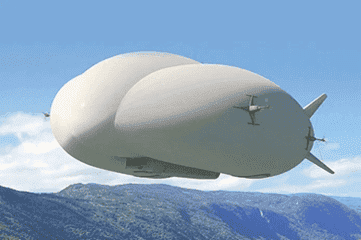
Could a blimp shrink into a plane?

Click For Summary

Discussion Overview

The discussion revolves around the conceptual design of a hybrid airship that can transform into a plane. Participants explore the feasibility, potential problems, and advantages of such an aircraft, addressing both theoretical and practical aspects of its design and functionality.

Discussion Character

  • Exploratory
  • Technical explanation
  • Debate/contested

Main Points Raised

  • One participant proposes a design where a blimp's skin could retract to form a wing as it transitions to a plane, raising questions about the classification of such an aircraft.
  • Another participant notes that the term "hybrid airship" encompasses various construction types, suggesting caution in interpreting existing models.
  • Concerns are raised about the storage of extra materials needed for the transformation, including the implications for payload space and structural integrity during flight.
  • Questions are posed regarding the machinery required for the expansion and contraction of the aircraft, including the volume of hydrogen tanks and the weight of pumps.
  • Participants discuss the necessary size for buoyancy and the implications for landing and takeoff areas, questioning the practicality of a smaller design.
  • One participant challenges the advantages of a hybrid design, asking what specific problems it aims to solve beyond convenience and speed.
  • Another suggests a more tubular design for efficiency at higher speeds, leading to a comparison with rocket designs and the complexities of lift versus buoyancy during transition.
  • A later reply reiterates the need to clarify the benefits of this hybrid concept compared to existing aircraft designs.

Areas of Agreement / Disagreement

Participants express a range of concerns and questions about the hybrid airship concept, indicating that there is no consensus on its feasibility or advantages. Multiple competing views on the design and functionality remain unresolved.

Contextual Notes

Limitations include unresolved questions about the structural requirements, the efficiency of the transformation process, and the trade-offs between lift and buoyancy during flight transitions.

MUZE
Messages
6
Reaction score
2
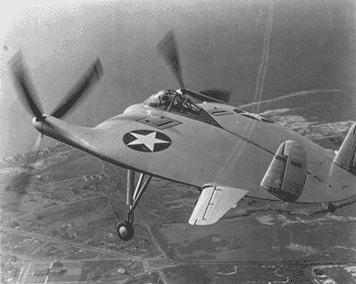
I can imagine a frame within a blimp/hybrid airship so when the hydrogen inside the blimp is recaptured the skin retracts to form a wing. As the blimp travels faster it shrinks, the buoyancy giving way to the lift from its wing shape to a point in which it is no longer a blimp, but a plane.
What problems may arise from this conceptual aircraft?

Scale aside this would be the rough general shapes of it on take-off and during flight.
How would one
1588716620623.png

class this type of aircraft?
1588715932358.png
 

Attachments

  • Revision 8.docx
    Revision 8.docx
    574.5 KB · Views: 276
  • 1588715902558.png
    1588715902558.png
    29.3 KB · Views: 297
Last edited:
  • Like
Likes   Reactions: Lnewqban
Physics news on Phys.org
The general term is hybrid airship. Since few, if any, became production models I would take the list of different hybrids in the article 'with several grains of salt'.

The term "hybrid airship" has also been used to describe an airship comprising a mix of rigid, semi-rigid, and non-rigid construction.
 
  • Like
Likes   Reactions: MUZE
A few problems I see off the top of my noggin:
  1. Where would all the extra material be stored? It would take up premium payload space.
  2. How would you turn a material - that is flexible enough to be compacted into the nooks and crannies of a plane - into a skin tight and rigid enough to not create deleterious drag from flapping around in the winds?
  3. How much extra machinery would be required to expand and contract the structure? How much hydrogen tank volume? How many heavy pumps?
  4. How much structure would the plane itself require in its surfaces to perform double duty supporting alternately aerodynamic functionality and balloon support?
  5. How big does such a dirigible have to be to be buoyant? How big would a plane have to be to support everything needed for the hybrid? Or, look at it the other way: how small could you make such a plane? If you don't get sufficient reduction in size, then you may not have much reason left to have an airplane form - it would still need dirigible-sized landing and takeoff areas.
 
  • Like
  • Informative
Likes   Reactions: Lnewqban, Klystron and MUZE
It comes down to functionality:
What advantage is gained by having this hybrid? Specifically, what advantage - other than convenience/speed - would be had by having a plane form - to offset the inevitable trade-offs?

Tell us what problem you're trying to solve.
 
  • Like
Likes   Reactions: Klystron
Maybe not as dramatic but enough to be efficient at faster speeds. Maybe a more tubular design for traveling higher and faster. It would just get thinner with less cross-section.
 
MUZE said:
efficient at faster speeds. Maybe a more tubular design for traveling higher and faster.
I think you're describing a rocket.

Seriously. In addition to all of the other problems, you will have to solve the lift vs. buoyancy trade off at every moment during the transition. I expect there is an in between configuration where you have a heavier than air craft with a wing shape that doesn't produce enough lift. It's a difficult problem, especially in a commercial market place that places extreme value on efficiency.
 
MUZE said:
What problems may arise from this conceptual aircraft?
Some people listed some problems, but can you say what benefits you would see to this idea vs current aircraft?
 

Similar threads

  • · Replies 2 ·
Replies
2
Views
5K
  • · Replies 1 ·
Replies
1
Views
5K
  • · Replies 1 ·
Replies
1
Views
4K
  • · Replies 21 ·
Replies
21
Views
5K
  • · Replies 11 ·
Replies
11
Views
5K
  • · Replies 5 ·
Replies
5
Views
5K
  • · Replies 1 ·
Replies
1
Views
3K