Homework Help Overview
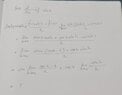
The discussion revolves around deriving the derivative of the sine function without relying on the derivatives of sine or cosine. Participants explore various approaches and foundational concepts related to trigonometric functions and their definitions.
Discussion Character
- Exploratory, Conceptual clarification, Assumption checking
Approaches and Questions Raised
- Participants consider using geometric interpretations of sine and cosine, as well as the Taylor series, to approach the problem. There is a discussion about the implications of using different definitions of trigonometric functions and whether those definitions require proof.
Discussion Status
The conversation is ongoing, with various perspectives on how to approach the proof. Some participants emphasize the importance of clarifying assumptions and definitions, while others suggest that the discussion should focus on the original poster's question. There is no explicit consensus on a single method or approach.
Contextual Notes
Participants mention constraints regarding the use of certain mathematical tools and definitions, indicating a desire to explore the problem from a foundational perspective. There is also a recognition of the complexity involved in rigorously defining angles and trigonometric functions.