Describe movement of particles with one equation?

Click For Summary
SUMMARY

The discussion centers on the challenge of mathematically describing the movement of air particles in a box toward a specific point A using a single generalized equation. Participants emphasize that due to the random motion of particles, a deterministic equation of motion cannot be established. Instead, concepts from Statistical Mechanics and the Random Walk problem are highlighted as relevant frameworks for understanding particle behavior. The conversation concludes that while Hamiltonian and Lagrangian formulations exist, they do not yield a singular solution for the motion of all particles.

PREREQUISITES
  • Understanding of Statistical Mechanics
  • Familiarity with Hamiltonian and Lagrangian mechanics
  • Knowledge of the Random Walk problem
  • Basic principles of particle dynamics
NEXT STEPS
  • Research the principles of Statistical Mechanics
  • Study Hamiltonian and Lagrangian formulations in classical mechanics
  • Explore the Random Walk problem and its implications in physics
  • Investigate deterministic vs. stochastic models in particle dynamics
USEFUL FOR

Physicists, mathematicians, and students interested in particle dynamics, statistical mechanics, and the mathematical modeling of random processes.

meyol99
Messages
25
Reaction score
1
Hello everybody,

I have a new thread to post,it is very important to find a solution for this :
-Imagine a box full of air particles.The particles are forced to move to a point A on the edge of the box.My question is now,how can I mathematicly describe the movement of these particles toward point A using one generalised equation ?

(See picture.)

Thank you for your time.
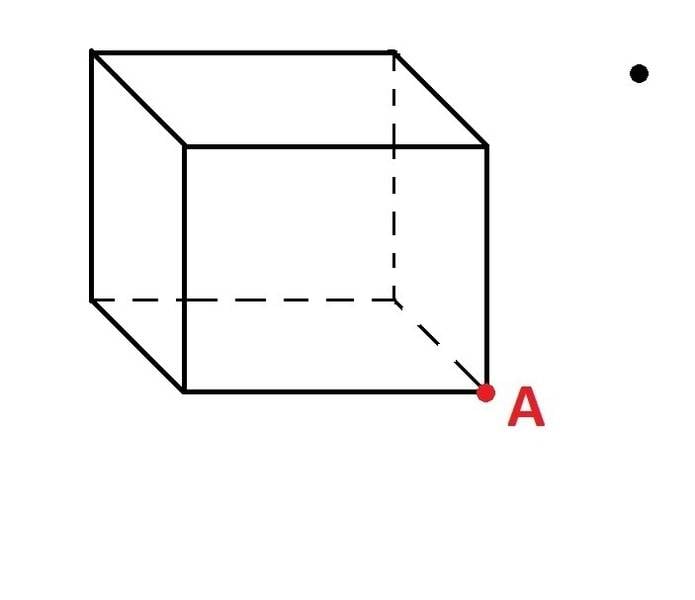
Untitled.jpg
 
Physics news on Phys.org
What do you mean with "one generalised equation"?
How are the particles forced to move towards A? A potential with a minimum at A will lead to a pressure difference in the box, but you won't get all particles moving all the way to A (unless you make a black hole there).
 
mfb said:
What do you mean with "one generalised equation"?
How are the particles forced to move towards A? A potential with a minimum at A will lead to a pressure difference in the box, but you won't get all particles moving all the way to A (unless you make a black hole there).

By saying "one generalised equation" I mean a single equation that will work for the whole "system" of particles.
It doesn't matter how the particles are forced to move towards A. A is a point where a particle can get out of the box.
 
You can write down a Lagrangian, but I doubt that's what you are looking for.

Can you give an example of "a single equation" in any system? Just to see what that is supposed to mean.
 
Mevludin Licina said:
By saying "one generalised equation" I mean a single equation that will work for the whole "system" of particles.
It doesn't matter how the particles are forced to move towards A. A is a point where a particle can get out of the box.

One can write the Hamiltonian, or the Lagrangian of the system, as mfb stated, but one cannot solve for the equation of motion.

The problem here is that you have a system that essentially has a random motion of all the particles. So you cannot write a deterministic equation of motion of ANY of the particles. You can talk about the probability of a particle from one location reaching another particular location, but you cannot determine the motion definitely. That is why we have Statistical Mechanics! If we can write such a deterministic equation of motion, we won't need any statistical treatment.

Look up "Random Walk" problem, and you'll understand why there isn't "one generalized equation" here.

Zz.
 
ZapperZ said:
One can write the Hamiltonian, or the Lagrangian of the system, as mfb stated, but one cannot solve for the equation of motion.

The problem here is that you have a system that essentially has a random motion of all the particles. So you cannot write a deterministic equation of motion of ANY of the particles. You can talk about the probability of a particle from one location reaching another particular location, but you cannot determine the motion definitely. That is why we have Statistical Mechanics! If we can write such a deterministic equation of motion, we won't need any statistical treatment.

Look up "Random Walk" problem, and you'll understand why there isn't "one generalized equation" here.

Zz.

Yeah,but there is one common characteristic for all particles : that is there all moving towards point A.
 
Mevludin Licina said:
Yeah,but there is one common characteristic for all particles : that is there all moving towards point A.

Why? What's compelling them to move towards that point? Is there a universal vortex that is sucking all the air particles in that box? You never did explain what is meant by "...The particles are forced to move to a point A on the edge of the box..."

If all you want is the "line equation describing the edge of the box", then this is not a physics physics question, but rather, a mathematics question.

Zz.
 
  • Like
Likes   Reactions: meyol99
ZapperZ said:
Why? What's compelling them to move towards that point? Is there a universal vortex that is sucking all the air particles in that box? You never did explain what is meant by "...The particles are forced to move to a point A on the edge of the box..."

If all you want is the "line equation describing the edge of the box", then this is not a physics physics question, but rather, a mathematics question.

Zz.
Yes
 

Similar threads

Replies
0
Views
2K
  • · Replies 9 ·
Replies
9
Views
2K
  • · Replies 35 ·
2
Replies
35
Views
4K
  • · Replies 48 ·
2
Replies
48
Views
5K
  • · Replies 11 ·
Replies
11
Views
4K
  • · Replies 9 ·
Replies
9
Views
4K
  • · Replies 18 ·
Replies
18
Views
2K
Replies
5
Views
3K
  • · Replies 6 ·
Replies
6
Views
2K
  • · Replies 45 ·
2
Replies
45
Views
6K