Homework Help Overview
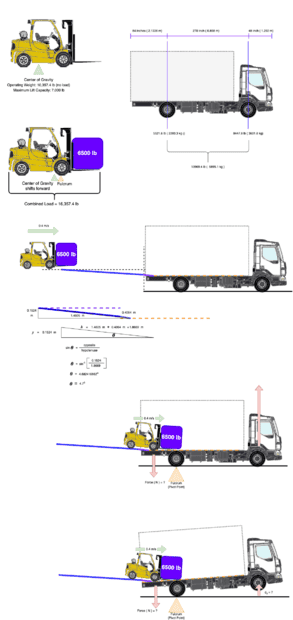
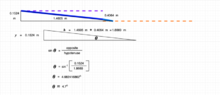
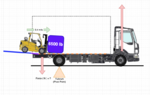
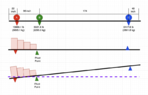
The discussion revolves around determining the maximum torque in a system involving a truck and a forklift. The problem includes concepts of velocity, weight, gravity, torque, and pivot points, suggesting a complex multi-step analysis.
Discussion Character
- Exploratory, Conceptual clarification, Mathematical reasoning, Problem interpretation, Assumption checking
Approaches and Questions Raised
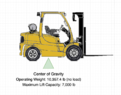
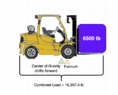
- Participants discuss the relevant equations, including F = m x a, and question the conversion of acceleration and velocity in the context of forces acting on the forklift. There is exploration of how the weight distribution changes as the forklift moves onto the truck, and the implications of momentum and impulse during this transition.
Discussion Status
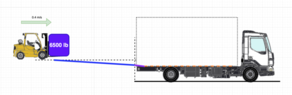
Participants are actively engaging with the problem, raising questions about the dynamics of the forklift as it transitions from the ramp to the truck bed. Some have offered insights into the forces at play and the need to calculate torques, while others are clarifying concepts and seeking to understand the implications of weight transference and impulse.
Contextual Notes
There are mentions of specific weights, dimensions, and conditions affecting the problem, such as the air ride suspension of the truck and the need for precise measurements of distances and forces. Participants also note discrepancies in provided data, which may affect the analysis.