yilbaris
- 6
- 0
We all know the lift force in case 1, what about case 2 ?
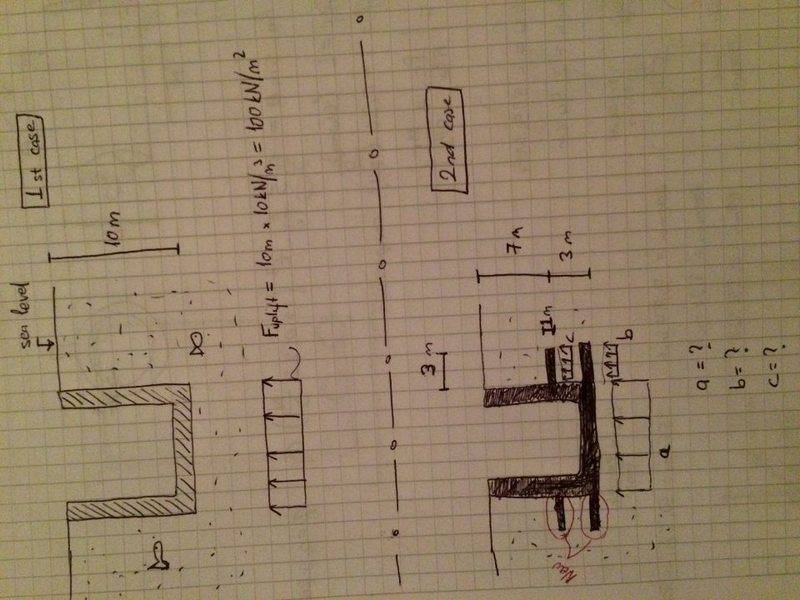
If by "lift force", you actually mean "buoyancy", this can be calculated for case 2, although it is slightly more complicated than case 1.yilbaris said:We all know the lift force in case 1, what about case 2 ?View attachment 89160
A force can never equal a pressure, the dimensions are different. An area element is subjected to a normal force equal to the pressure multiplied by the areaMrAnchovy said:Every point on the submerged surface of the object feels a normal force equal to the pressure at that depth ## \rho g h ##
I wanted to steer clear of elemental areas for the sake of clarity but I take your point; I have amended 'equal' to 'proportional'.Orodruin said:A force can never equal a pressure, the dimensions are different. An area element is subjected to a normal force equal to the pressure multiplied by the area