PhysicsKT
- 17
- 0
The energy density of an electromagnetic field with a linear dielectric is often expressed as
 . It is also known that energy can be found by
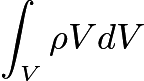 . Using the latter, the energy density is found to be
 , as is well known. If you integrate the latter only over free charge and ignore bound charge, you write
 , use integration by parts, and obtain the first result. Does the first result neglect the energy from bound charge? If not, why does
 break down (I.e. why can’t one find the energy with a dielectric by treating the bound charge as its own independent charge arrangement and using formulae for a vacuum?)
Attachments
-
 1994848e8909b58aaa7dfa748264681c15b04cdb.png741 bytes · Views: 743
 -
 90ce12f273329132bc0a22e77cabd6fadd9317ec.png1,020 bytes · Views: 650
 -
 2b95635ceca0346d915aadc5ef5f3f8047d12dd6.png826 bytes · Views: 717
 -
 a3e754ebda6b4b4d609f6ac85bb3d8b3f6fa3516.png700 bytes · Views: 591
 -
 2b95635ceca0346d915aadc5ef5f3f8047d12dd6.png826 bytes · Views: 607