SUMMARY
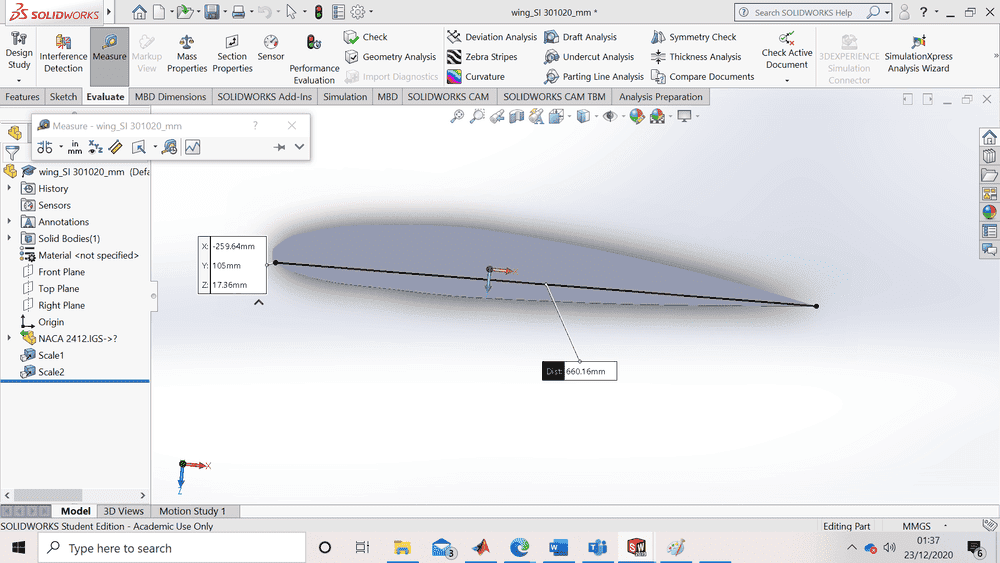
The discussion focuses on estimating the Reynolds number for fluid flow around a wind turbine blade with a length of 0.66 meters. Key parameters include the density of air at 1.225 kg/m³ and dynamic viscosity at 1.789 x 10^-5 Pa.s. Participants emphasize the importance of using typical fluid velocities, which range from 3 to 30 m/s, with a moderate value around 10 m/s. The Reynolds number is calculated using the formula involving fluid density, flow velocity, and dynamic viscosity.
PREREQUISITES
- Understanding of Reynolds number and its significance in fluid dynamics
- Knowledge of fluid properties: density and viscosity
- Familiarity with basic fluid mechanics concepts
- Ability to perform calculations involving fluid flow parameters
NEXT STEPS
- Research the formula for calculating Reynolds number in fluid dynamics
- Investigate typical wind speeds for offshore wind installations
- Learn about the impact of fluid viscosity on flow patterns
- Explore the relationship between blade length and performance in wind turbines
USEFUL FOR
Students studying fluid dynamics, engineers working on wind turbine design, and anyone involved in renewable energy projects focused on optimizing turbine performance.