Help with electromagnetic musical instrument design

Click For Summary
SUMMARY

The forum discussion centers on the design and optimization of an electromagnetic musical instrument featuring 26 strings actuated by electromagnets. The current setup utilizes E-shaped core coils with 8.9 DC resistance, but the user seeks to enhance the magnetic flux concentration towards the strings to improve sound volume and efficiency. Key considerations include the core configuration, the impact of coil dimensions on flux shape, and the potential benefits of using materials like permalloys or mu-metals. The user also explores the differences between current and voltage sources in generating magnetic fields, emphasizing the need for experimentation to refine the instrument's performance.

PREREQUISITES
  • Understanding of electromagnet design and operation
  • Knowledge of audio circuitry and signal processing
  • Familiarity with magnetic materials, including permalloys and mu-metals
  • Basic principles of electromagnetic theory, including flux and saturation
NEXT STEPS
  • Research the effects of coil diameter and length on magnetic flux concentration
  • Explore the use of permalloys and mu-metals in electromagnet design
  • Investigate transient generator circuits for improved string excitation
  • Learn about the differences between current source and voltage source amplifiers in electromagnetic applications
USEFUL FOR

Musical instrument designers, audio engineers, and hobbyists interested in electromagnetic actuation and sound synthesis techniques.

ulfurh
Messages
5
Reaction score
1
Hello everyone,

For the past 4 years I have been working on a new type of musical instrument that fuses together elements from electronic music into the acoustic realm.

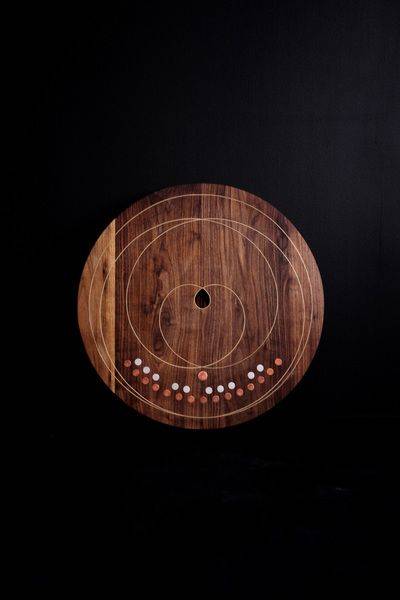
The instrument consists of 26 strings inside a wooden enclosure that are actuated (or "bowed") by the use of electromagnets. Each string driver circuit is turned on by touching the capacitive sensor pads on the front. The latest iteration looks like this :
L1002015kropp_670.jpg


It's a very exciting project, as the timbre and playability is unlike anything else out there... However, there is still a lot of room for improvements, and the most important factor at this point is the design of the electromagnets that make the strings vibrate.

I am currently using coils with E-shaped cores of 8.9 DC resistance, they are 21mm in length and 20mm in diameter. They are positioned about one centimeter away from the string, and sometimes I put a small neo-dymium magnet on the end of the core to increase the effect on the string.

I believe the relatively powerful magnetic flux I am currently generating with my string-driver coils is mostly being wasted outside of the general string area in a typical figure eight shaped field. I would really like to try and concentrate the coil energy more towards just the string itself - this would hopefully allow me to get away with a smaller amp design.

I have tried running current through the string placing a neo-dymium magnet close to it - but the electromagnet solution seems to work a lot better.

The size of the electromagnets is a major consideration, but I'm very interested in learning more about for instance the effect of diameter vs length of a coil on the flux shape - and also the use of permalloys/mu-metals to concentrate magnetic fields onto a specific target (the string!).

Also, maybe there are other core configurations worth considering - U-shaped cores for instance - but finding vendors for such electromagnets is very difficult online - making it difficult to prototype...

Furthermore, I'm very interested in learning more about the difference between current and voltage when it comes to generating magnetic fields. Is it true that a current source amplifier is better suited to generating flux than a voltage source amp? (this may be better suited to the engineering forum!)

I am by no means literate in physics, or even math - however I am very persistent, and know a thing or two about audio circuitry... I'd really appreciate your thoughts on the matter, any thoughts at all!

All the best,
-ulfurh

 
Physics news on Phys.org
Hi ulfurh. :welcome:

The electromagnet delivers just a single brief pulse of energy to set the string vibrating, does it?

The strings are stainless steel? Do they hit against their electromagnet's E core when it's energised?
 
the electromagnets actually output a consistent alternating current that matches the fundamental frequency of each string. each individual string never touches it's electromagnet core, but swings pretty close to them... the strings i use are for electric guitars, hence ferromagnetic!
 
ulfurh said:
the electromagnets actually output a consistent alternating current that matches the fundamental frequency of each string. each individual string never touches it's electromagnet core, but swings pretty close to them... the strings i use are for electric guitars, hence ferromagnetic!
Each driver's frequency is fixed or preset and you just hope that a string's length or tension or temperature won't change while you're playing?

So there is no abrupt attack, instead each note starts up gently and its volume builds smoothly from nothing?
 
the circuit that drives the string automatically tunes itself to the strings fundamental frequency - so the driver frequency is not fixed, but dynamic. the volume builds up from nothing in about 200 ms.
 
  • Like
Likes   Reactions: CWatters
You are wanting to more efficently couple energy into the string to get greater volume of sound, or is it to allow you to reduce the electromagnet's size and current while keeping volume as it already is?

Have you ruled out attachng a small piece of magnetic material to each string for the electromagnet to better interact with?
 
more efficient use of the energy I'm outputting through the coils is really what I'm trying to do, although the volume could be slightly better as well (volume is still not a chief concern!)

attaching a piece of magnetic material to the string will distort the resulting sound, and increase inharmonicity (i've already tried soldering tiny magnets to the string itself)

maybe the core is simply saturated and cannot make use of all the current flowing through the coil. they do heat up quite a bit (without melting!)... is there a way of increasing the core saturation threshold? maybe using a magnetic core rather than iron?
 
ulfurh said:
more efficient use of the energy I'm outputting through the coils is really what I'm trying to do, although the volume could be slightly better as well (volume is still not a chief concern!)

attaching a piece of magnetic material to the string will distort the resulting sound, and increase inharmonicity (i've already tried soldering tiny magnets to the string itself)

maybe the core is simply saturated and cannot make use of all the current flowing through the coil. they do heat up quite a bit (without melting!)... is there a way of increasing the core saturation threshold? maybe using a magnetic core rather than iron?

Your instrument is quite pretty.

What you are doing is similar to the Ebow.

Can you magnetize the strings? If off-the-shelf strings aren't magnetizable, maybe you could wrap them with thin magnetizable tape, or spray them with tiny particles of magnetizable material in glue. Or something like that. There has to be a way to do it.
 
Are the electromagnets positioned midway along each string?
 
  • #10
Perhaps you can look at the current waveform to determine if they are saturating? When saturated you typically get a lot of distortion.

Is there any DC on the coils? Are you operating the coils "single ended" ? eg one end grounded and switching the other between 0 and 5V or symmetrically -2.5 to +2.5V? Any DC will reduce the "headroom" before saturation occurs.

Iron cores are more susceptible to saturation than specialist materials. I'm very rusty but it should be possible to calculate the max current at which a core will saturate.
 
  • #11
the coils are positioned at around one third of the strings length.

there is no DC, and i am driving them with a dual ended amplifier. the output is definitely clipping, which is probably a big part of my problem.

a couple of thoughts : would a larger core with the same amount of wire (same impedance, different number of turns ) possibly give me more headroom?

I cannot make the magnet core length any greater, but if I where for instance to make the electromagnet design with a core of greater diameter (flattened out design) would the increased amount of iron give me more headroom for saturation?

thank you all for pitching in!
 
  • #12
If in the region of the magnet you were to glue to each string a parallel short length of identical string it would become more responsive to the magnetic field, so possibly allowing you to reduce the drive amplitude. A drive signal that is a squarewave may be more effective than the sinewave---experimentation is needed. Each taut string acts like a filter, so a squarewave drive may not alter the strng's smooth oscillations.
 
  • #13
I have actually seen (and worked on) something similar. It was a robust pressure gauge, consisting of a U-shaped piece of steel with a string between the arms of the U.
An electromagnet with an attached electronic circuit made the string vibrate at its fundamental frequency. Now: If you apply a force to the arms of the U, the frequency will fall (if the force is compressing the U) or rise. Since the natural frequency is proportional to the square root of the force on the string, you can find the force by measuring the frequency and apply a simple mathematical formula (you need to know the "zero-force" frequency for the sensor, though).

Now, it has been more than 30 years since I worked with that sensor, but I remember that the electronic circuit was a bit fiddly and slow-starting. So, for a cost-reduced version, the circuit was changed: A short pulse was applied to the electromagnet, and the frequency of the resulting tone measured. Just like a picked guitar string, the tone would die out fairly rapidly, but creating a circuit to measure the average frequency over 8 or 16 vibrations was fairly simple.
 
  • #14
This sounds similar to some active electroacoustic instruments I designed at college in the early 90s. But yours is a lot better looking!

Have you considered using a transient generator to excite the string and a guitar pickup to provide feedback which could then be fed into the driver coil? This would give excellent tuning stability, a more sinusoidal driver signal and enormous potential for timbral control, especially if you put a bandpass VCF in the feedback circuit with the hipass and lopass cutoffs modulated by the transient generator, and a LFO and some kind of wheel or pressure sensitive controller. Using an OTA such as the LM13700N, which is very cheap, you could lash something together in a morning using circuits from the manufacturer's datasheet plus a million others on the web.
 
  • #15
Use a tape head gap pole electromagnet .
 

Similar threads

  • · Replies 6 ·
Replies
6
Views
2K
  • · Replies 43 ·
2
Replies
43
Views
7K
  • · Replies 8 ·
Replies
8
Views
4K
  • · Replies 2 ·
Replies
2
Views
1K
  • · Replies 6 ·
Replies
6
Views
2K
  • · Replies 42 ·
2
Replies
42
Views
3K
  • · Replies 17 ·
Replies
17
Views
2K
  • · Replies 31 ·
2
Replies
31
Views
5K
  • · Replies 4 ·
Replies
4
Views
2K
  • · Replies 5 ·
Replies
5
Views
2K