Discussion Overview
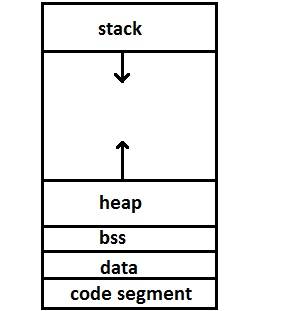
The discussion revolves around how memory for processes is stored in RAM, focusing on the organization of memory segments such as stack, heap, data, bss, and code. Participants explore the implications of memory allocation in a multitasking environment and the behavior of the heap and stack in relation to each other.
Discussion Character
- Exploratory
- Technical explanation
- Debate/contested
Main Points Raised
- One participant inquires about the representation of memory for a single program, noting that while stack, data, bss, and code segments are fixed, the heap can grow indefinitely.
- Another participant explains that memory is allocated in separate segments for different programs, managed by the operating system in a multitasking environment.
- Questions arise regarding the size of free memory between the stack and heap for each segment and what occurs if the heap exceeds this space.
- A participant mentions that the heap could be placed in a different segment from the stack, and historical context is provided regarding PC-DOS programs where heap overruns were common.
- Discussion includes the distinction between logical and physical memory, with a focus on how logical address space is partitioned into fixed-sized blocks, often referred to as "pages."
- Concerns are raised about the implications of the heap growing into the stack, with a humorous analogy referencing a movie to emphasize the potential dangers of such an occurrence.
- Another participant notes that modern systems prevent the heap from growing into the stack, and exceeding stack limits can lead to stack overflow errors.
Areas of Agreement / Disagreement
Participants express uncertainty about the specifics of memory allocation and management, particularly regarding the interactions between the heap and stack. There is no consensus on how these interactions are handled or the implications of potential overlaps.
Contextual Notes
Limitations include the lack of clarity on the exact mechanisms that govern the size of free memory between stack and heap, as well as the conditions under which the heap may grow into the stack.