dstealth
- 3
- 0
Hi all, I'm Chris, a first time poster!
Currently stuck on an assignment question for my mechanical engineering course. The question is shown in the picture below. The capital T refers to 'teeth', as in 20T is 20 teeth on that particular gear. Ignore the little arrows with P and S - that is just me labeeling up the planetary and the sun gears. I answered a previous question on epicyclic gearboxes no problem but we have not been taught how to answer one this complex:-
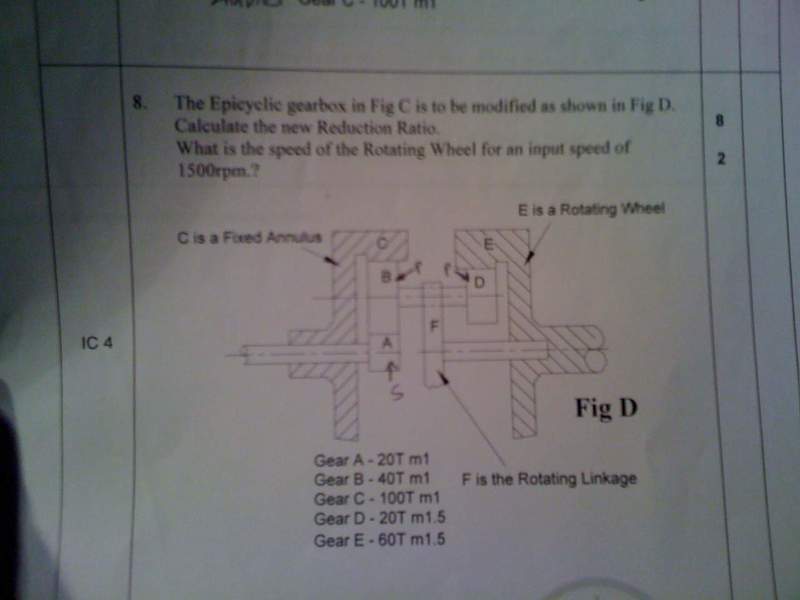
Any pointers?
Thanks in advance.
Currently stuck on an assignment question for my mechanical engineering course. The question is shown in the picture below. The capital T refers to 'teeth', as in 20T is 20 teeth on that particular gear. Ignore the little arrows with P and S - that is just me labeeling up the planetary and the sun gears. I answered a previous question on epicyclic gearboxes no problem but we have not been taught how to answer one this complex:-
Any pointers?
Thanks in advance.