How Efficient Is Split-Return Coil Design for Quenching in Induction Heating?

Click For Summary
SUMMARY

The discussion focuses on the design of an induction heating rig utilizing a split-return rectangular copper pipe coil for quenching steel samples. The objective is to heat the sample to 600°C in 20 seconds and subsequently cool it to 30°C in the same timeframe. Key insights include the potential for minimal eddy current heating in areas where magnetic fields from parallel conductors cancel each other out, and the importance of using a flux concentrator to enhance heating efficiency in the center leg of the coil.

PREREQUISITES
  • Understanding of induction heating principles
  • Familiarity with coil design and magnetic field interactions
  • Knowledge of thermal dynamics in quenching processes
  • Experience with flux concentrators in electromagnetic applications
NEXT STEPS
  • Research the effects of coil geometry on induction heating efficiency
  • Explore advanced cooling techniques for induction heating systems
  • Study the impact of eddy currents in induction heating applications
  • Investigate the design and implementation of flux concentrators
USEFUL FOR

Engineers and designers involved in induction heating applications, materials scientists focusing on quenching processes, and professionals seeking to optimize coil designs for enhanced heating efficiency.

ABrown123
Messages
2
Reaction score
0
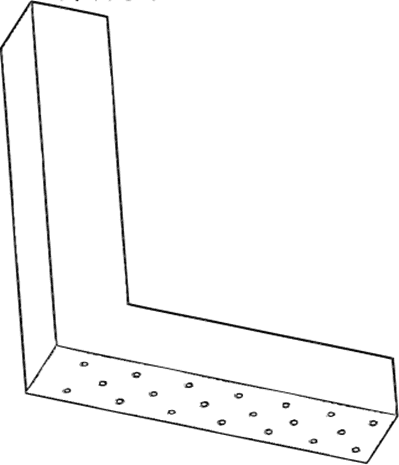
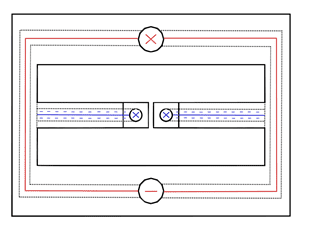
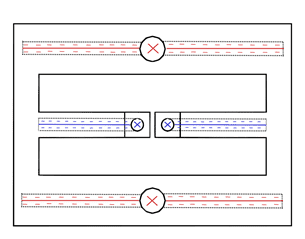
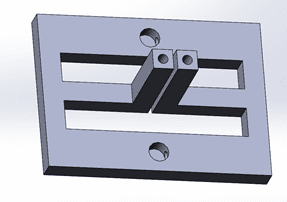
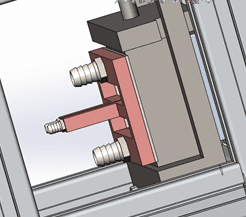
I am designing an induction heating rig to heat a strip on the surface of a steel sample with repeated quenching, through holes in the heating surface of the coil (shown in the third image). The rig should heat the sample to around 600C in 20 seconds, and quench to 30C in 20 seconds.

Firstly, could anyone comment on the current coil design (split-return rectangular copper pipe)
Secondly, there are two options for cooling, as shown in the image, one which quenches the sample from the centre leg and one which does so via the centre and return legs. Would the coil get too hot if it was only cooled during the quench cycle (half of the time) as in the second image?Thanks in advance
upload_2017-1-31_15-15-53.png
upload_2017-1-31_15-16-2.png
upload_2017-1-31_15-16-12.png
upload_2017-1-31_15-16-23.png
upload_2017-1-31_15-16-34.png
 
Engineering news on Phys.org
ABrown123 said:
Firstly, could anyone comment on the current coil design (split-return rectangular copper pipe)
It looks to me like the magnetic fields of the three parallel conductors will produce two opposite poles. There must be an area between the poles, under the central feed conductors, where those three fields cancel. There will be little eddy current heating just where you want it.
 
Baluncore said:
It looks to me like the magnetic fields of the three parallel conductors will produce two opposite poles. There must be an area between the loops, under the central feed conductors, where those three fields cancel. There will be little eddy current heating just where you want it.

From what i understand, in the centre leg the current would be twice that and the power 4 times that of the return legs if they are the same thickness, even more if the return legs are thicker (in this design theyre twice as thick). I will also be using a flux concentrator focused around the centre leg. Hopefully this would suffice to prevent this flux interaction cancelling out below the centre legs?
 
ABrown123 said:
I will also be using a flux concentrator focused around the centre leg. Hopefully this would suffice to prevent this flux interaction cancelling out below the centre legs?
You have a south pole on one side and a north pole on the other. There must be a line or zone between them where the opposite fields cancel.
 
Most likely this can only be answered by an "old timer". I am making measurements on an uA709 op amp (metal can). I would like to calculate the frequency rolloff curves (I can measure them). I assume the compensation is via the miller effect. To do the calculations I would need to know the gain of the transistors and the effective resistance seen at the compensation terminals, not including the values I put there. Anyone know those values?

Similar threads

  • · Replies 8 ·
Replies
8
Views
2K
Replies
7
Views
7K
  • · Replies 51 ·
2
Replies
51
Views
4K
  • · Replies 4 ·
Replies
4
Views
3K
  • · Replies 3 ·
Replies
3
Views
2K
Replies
5
Views
4K
Replies
1
Views
4K
  • · Replies 2 ·
Replies
2
Views
2K
  • · Replies 1 ·
Replies
1
Views
3K
  • · Replies 9 ·
Replies
9
Views
2K